The SPR's floor may be geological, not political
The reserve fell below 300 million barrels for the first time since the 1980s, and the argument is no longer about willingness to release oil. It is about salt.
The Investor · Invest desk
What happened
- Last week the Strategic Petroleum Reserve plunged below 300 million barrels for the first time since the 1980s, when the reserves were being filled, according to the Department of Energy; strategic oil inventories have reached a 40-year low.
- The SPR is expected to drain further to 243 million barrels as the U.S. releases 172 million barrels to manage severe supply disruptions and rising energy costs due to the Iran war.
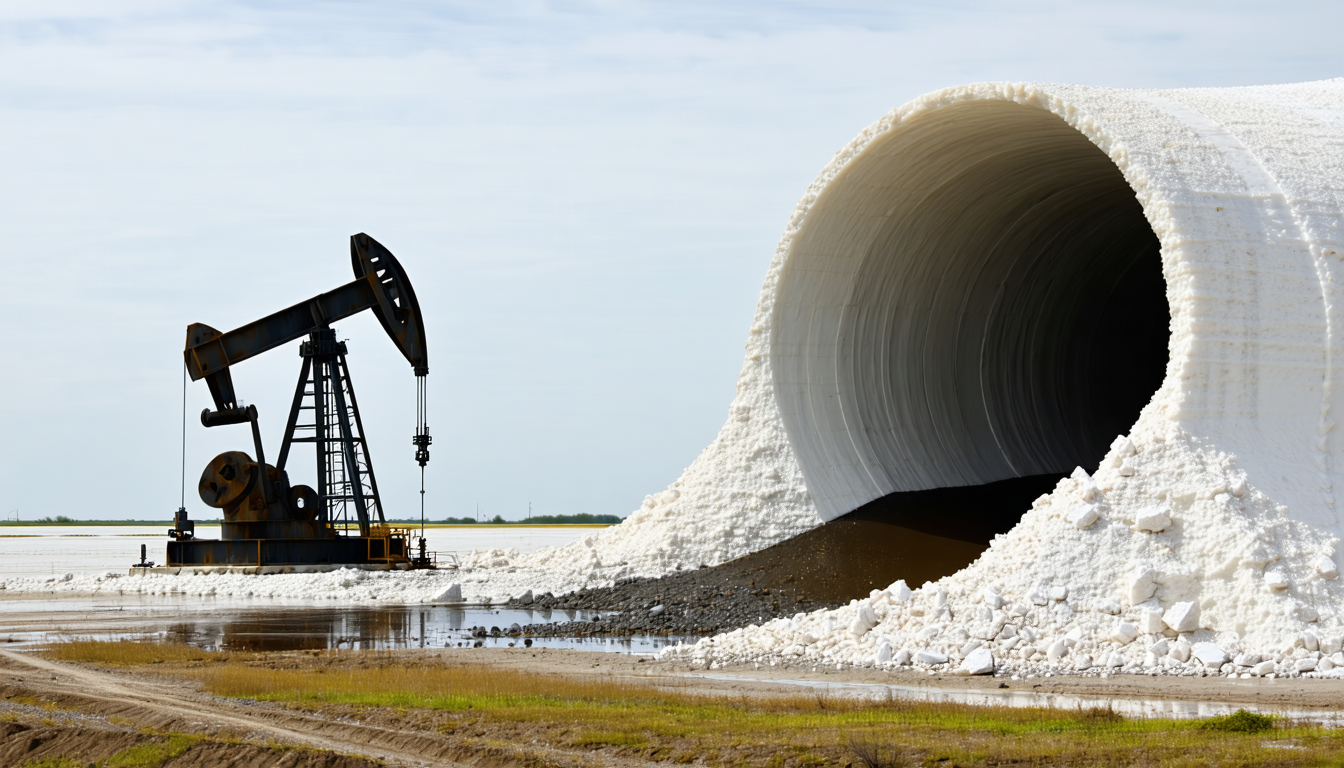
- The reserves are kept in 60 salt caverns across two sites in Texas and two sites in Louisiana, each thousands of feet underground, with total storage capacity of 714 million barrels.
- Amos Hochstein, a senior energy advisor for former President Joe Biden, told CNBC on Saturday: 'I don't know anyone who believes we can go below 300. I know plenty of people who think we can't get near 300 because physically you will damage the caverns where the oil is stored.'
- The Department of Energy denied Hochstein's claim that changing inventory levels risk harming the caverns. DOE chief spokesperson Ben Dietderich told Fortune: 'The caverns are always full. All that changes is the ratio of oil and water that is filling them,' adding that President Trump and Energy Secretary Chris Wright are responsibly managing the SPR as the critical national security asset it was designed to be.
Why it matters
The Strategic Petroleum Reserve dropped below 300 million barrels last week for the first time since the 1980s, when the stockpile was still being filled, according to the Department of Energy [1]. The reason that matters is not the headline number but the possibility that the reserve's practical floor is set by the condition of the caverns holding the oil rather than by anyone's policy choice [4].
The inventory is expected to fall further to 243 million barrels as the United States releases 172 million barrels to manage supply disruptions and rising energy costs tied to the Iran war [2]. That path implies roughly 57 million barrels of additional net decline from the level already reached [11]. The oil sits in 60 salt caverns across two sites in Texas and two in Louisiana, thousands of feet down, with total storage capacity of 714 million barrels [3]. At 243 million barrels, the reserve would hold about 34 percent of that capacity [12].
"I don't know anyone who believes we can go below 300," Amos Hochstein, a senior energy adviser to former President Joe Biden, told CNBC on Saturday. "I know plenty of people who think we can't get near 300 because physically you will damage the caverns where the oil is stored" [4]. The Department of Energy rejects that. "The caverns are always full. All that changes is the ratio of oil and water that is filling them," DOE chief spokesperson Ben Dietderich told Fortune, adding that the SPR is being managed responsibly as a national security asset [5].
Both sides are describing the same physical fact. Because total fluid volume must stay at 714 million barrels, operators pump fresh water in as oil comes out to hold pressure stable, according to Siddharth Misra, an associate professor of petroleum engineering and geophysics at Texas A&M [6]. Misra says that water "aggressively dissolves the salt walls," widening each cavern and thinning the walls between adjacent chambers, while injecting cool water into naturally warmer formations can cause thermal shock, breaking off large pieces of salt that may damage extraction pipes [15]. He also notes the caverns were built in the 1970s and 1980s with an initial 25-year design life and were engineered for about five drawdown and refill cycles, but have absorbed dozens of releases [7].
The Government Accountability Office found that as of May most caverns were in "very good condition," in a report made public in June, while warning that "every drawdown cycle expands cavern volume and reduces the spacing between caverns within the salt dome, which ultimately reduces their long-term viability" [8].
The cost side is already on the record. Energy Secretary Chris Wright testified to a House Energy and Commerce subcommittee in 2025 that refilling was hampered by more than $100 million in needed repairs, which he attributed to the speed of the Biden administration's sale of nearly 200 million barrels in 2022 and 2023 [9]. The current release of 172 million barrels is roughly 86 percent the size of the drawdown Wright blamed for that damage [13].
DOE puts the minimum operating level at 70 million barrels [10], which leaves 173 million barrels of nominal headroom below 243 million [14]. Misra says current levels still present a real risk [16].
Watch three things: whether the release actually runs to 243 million barrels or stalls earlier; whether repair estimates move above the $100 million figure Wright cited [9]; and whether DOE publishes cavern-by-cavern integrity data rather than the assurance that the caverns are always full [5].
Information, not investment advice. This story is general information about companies and markets, drawn from cited reporting. It is not a recommendation to buy, sell or hold any security; check the cited sources before acting.
Clarity's read
What the record supports and how the coverage leans. The claims behind it follow.
Reality
- Evidence60
- Adoption68
- Hype gap+24
- Incentives74
- Confidence62
Claim ledger
Ranked by verification strength, evidence, and original report placement.
- [1]
Last week the Strategic Petroleum Reserve plunged below 300 million barrels for the first time since the 1980s, when the reserves were being filled, according to the Department of Energy; strategic oil inventories have reached a 40-year low.
- [2]
The SPR is expected to drain further to 243 million barrels as the U.S. releases 172 million barrels to manage severe supply disruptions and rising energy costs due to the Iran war.
- [3]
The reserves are kept in 60 salt caverns across two sites in Texas and two sites in Louisiana, each thousands of feet underground, with total storage capacity of 714 million barrels.
- [4]
Amos Hochstein, a senior energy advisor for former President Joe Biden, told CNBC on Saturday: 'I don't know anyone who believes we can go below 300. I know plenty of people who think we can't get near 300 because physically you will damage the caverns where the oil is stored.'
- [5]
The Department of Energy denied Hochstein's claim that changing inventory levels risk harming the caverns. DOE chief spokesperson Ben Dietderich told Fortune: 'The caverns are always full. All that changes is the ratio of oil and water that is filling them,' adding that President Trump and Energy Secretary Chris Wright are responsibly managing the SPR as the critical national security asset it was designed to be.
- [6]
During drawdowns the total fluid volume inside the facilities must always remain at 714 million barrels, meaning operators must pump fresh water into the facilities to keep pressure stable, according to Siddharth Misra, associate professor of petroleum engineering and geophysics at Texas A&M University.
- [7]
Misra said the caverns, constructed in the 1970s and 1980s, were designed with an initial 25-year lifespan and engineered to handle just five drawdowns and refills, but the facilities have instead endured dozens of releases in that timeframe.
- [8]
A Government Accountability Office report released to the public in June found that as of May most of the SPR's caverns were in 'very good condition' following the drawdowns, but warned that 'every drawdown cycle expands cavern volume and reduces the spacing between caverns within the salt dome, which ultimately reduces their long-term viability.'
- [9]
In 2025 Energy Secretary Chris Wright testified to the House Energy and Commerce Subcommittee on Energy that efforts to replenish the SPR were hampered by more than $100 million in necessary repairs to the reserve's facilities, which he attributed to the quick drawdown following the Biden administration's sale of nearly 200 million barrels in 2022 and 2023 to steady global energy costs amid Russia's invasion of Ukraine. Wright said: 'It was drawn down so quickly, and that causes some damage to the infrastructure itself.'
- [10]
The Department of Energy says the minimum amount of oil needed to operate the SPR is 70 million barrels.
- [11]
Falling from just under 300 million barrels to a projected 243 million barrels implies roughly 57 million barrels of further net decline.
- [12]
At 243 million barrels, the SPR would hold about 34 percent of its 714 million barrel total storage capacity.
- [13]
The current 172 million barrel release is about 86 percent the size of the nearly 200 million barrels sold in 2022 and 2023 that Wright blamed for infrastructure damage.
- [14]
A projected 243 million barrels leaves 173 million barrels of nominal headroom above the 70 million barrel minimum operating level cited by DOE.
- [15]
Misra said the injected water 'aggressively dissolves the salt walls,' widening the cavern and thinning the walls separating adjacent chambers, and that pumping cool water into naturally warmer caverns can cause thermal shock, making large pieces of salt fall and break and potentially damaging extraction pipes. He added: 'From an engineering and geomechanical standpoint, these concerns are highly valid. Salt is a highly dynamic rock type, and aggressively altering the fluids, pressure, and temperatures inside these deep caverns directly threatens their structural integrity.'
- [16]
Misra said the current reserve levels still present a real risk to the reserves.
Sources
2 independent publishers whose own reporting we read for this story.
- cryptobriefing.comUS oil reserves fall to lowest level in over 40 years
1 article · August 17, 2026
- fortune.comU.S. strategic reserves are getting so low it threatens damaging the 60 underground salt caverns storing American oil
1 article · August 17, 2026
Topics and entities
Topics
- Critical Infrastructure Maintenance
- Energy Security Policy
- Strategic Petroleum Reserve
- Crude Oil Markets
- Salt Cavern Storage Integrity