Apple reportedly plans to split iPhone launches, with base models arriving next spring
The foldable will take the attention on Wednesday, but for teams that maintain a device matrix the consequential item is duller, a launch calendar that reportedly breaks into an autumn half and a spring half.
The Product Desk
What happened
- Apple's iPhone launch event falls on Wednesday, September 9, and will be the first such showcase run under John Ternus as chief executive.
- Apple is expected to unveil its first foldable iPhone, a passport-style design that closes to roughly a 4:3 aspect ratio rather than the flip or book shapes Android foldables use.
- The fall slot would carry only the iPhone 18 Pro models, with the base iPhone 18 and an iPhone Air update reportedly held for a spring launch around March.
- Final builds of iOS 27 are expected at the event, but Apple has not yet publicly shown the dual-screen version of iOS 27 that runs on the foldable.
- Bloomberg reports Apple may also introduce a home hub, described as a HomePod with an iPad attached, putting smart home and entertainment widgets on a multitouch display.
Why it matters
- Who has to decide decision Whoever maintains a device matrix now budgets two hardware intakes a year rather than one, and has to decide which of them gets lab devices, screenshot refreshes and support-page edits first.
- What it limits constraint A closed state near 4:3 does not fall out of layouts built for tall slabs, so fold support is design work with its own review cycle rather than an extra breakpoint in an existing stylesheet.
- What's now possible capability If the countertop speaker with a screen ships, smart home vendors get a first-party display surface for their controls, which is a place to put a UI they currently have nowhere to put.
- What doesn't add up contradiction Fast Company frames the event as the most consequential in over a decade, yet the hardware in its own preview runs five same-case chip upgrades against two new surfaces, one of which nobody at Apple has confirmed.
Next story · Product · Oct 9
Apple reportedly cuts October iPhone 18 Pro component orders by 15% as memory costs riseConfirmed11 publishers
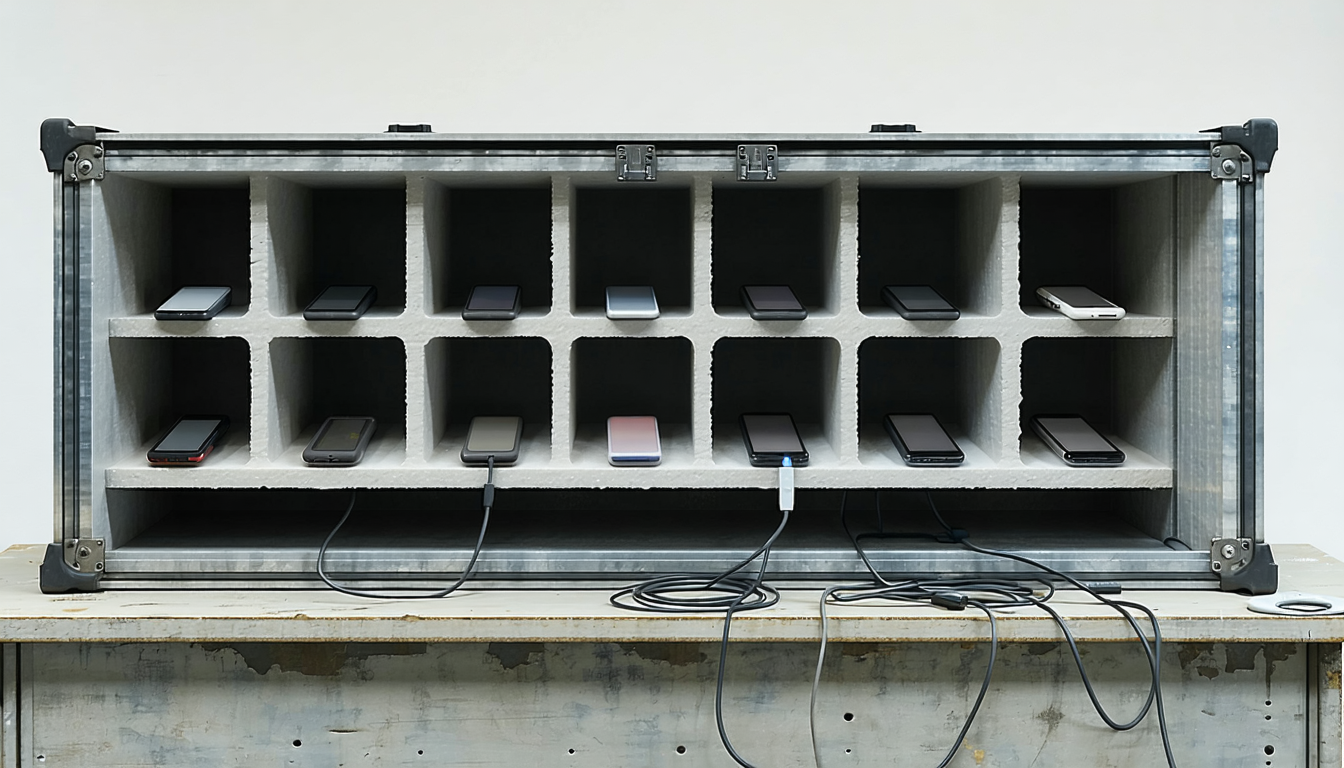
Somebody on a mobile team owns the spreadsheet of test devices, and autumn is when new rows get added. This year the non-Pro row arrives late. Count the gap between the two intakes and it is about six months: hardware in September, hardware again in March [17].
One keynote a year has meant one intake. Buy the phones, re-shoot the store screenshots, check layouts against the new safe areas, update the support page that lists which models you cover. Splitting that into autumn and spring does not add hours so much as it adds a second start, and second starts are where owners go missing. For most teams the spring quarter was planned without a phone launch in it, reasonably enough, because Apple has never held a base iPhone back that way before [2].
Design generations are rare enough that most product managers have never planned one. The home button ran from the original in 2007 to the iPhone 8 in 2017, and the all-screen Face ID design has run from the iPhone X onward [13]. Ten years, then nine [20][19]. Having no template for this is the ordinary condition.
The Pro phones, by contrast, get the familiar list: an A20 chip, improved cameras, a smaller Dynamic Island, fresh colors [6]. That belongs in a release note, with a device in a drawer beside it.
The change at the top gets the most attention, but it settles nothing a planner needs settled. Ternus taking the stage [1] does not move any date or layout constraint that a rollout plan can cite. Fast Company puts the stakes high partly because Apple has not had a hit new product in years, naming Vision Pro [22], which is a fair reading of Apple's position, though it says nothing about next Monday.
The sort worth doing runs on two axes: does the thing change a surface your code draws on, and does it change a month in your calendar. Faster silicon changes neither and can wait; the foldable changes a surface, the spring slot changes a month, and a countertop display, if it appears, changes a surface that probably belongs to whoever owns your smart home integrations rather than to your app team. Everything in the neither box can stay unowned until hardware is in someone's hands. Anything in the other three boxes needs a name against it before Apple publishes the tools, because that is when somebody asks for an estimate, and the honest answer will depend on work nobody has scheduled.
What to watch
- Whether Apple states the spring slot on stage or leaves base iPhone 18 timing unconfirmed after the keynote.
- Whether a dual-screen iOS 27 simulator and layout guidance ship with the foldable, and what Apple calls the closed state.
- Whether the countertop display ships this week or slips again after years of rumours.
Clarity's read
What the record supports and how the coverage leans. The claims behind it follow.
Reality
- Evidence50
- Adoption
- Not scored
- Hype gap+20
- Incentives45
- Confidence55
Perspective Coverage
12 publishers- Builder
- Builder 18%
- Operator
- Operator 56%
- Investor
- Investor 26%
Claim ledger
Ranked by verification strength, evidence, and original report placement.
- [1]
The event will be the first showcase under Apple's new CEO, John Ternus.
- [2]
In a first for Apple, it will reportedly not release a base iPhone 18 model or an updated iPhone Air alongside the iPhone 18 Pro series.
- [3]
Apple is expected to unveil its first-ever foldable iPhone, referred to in rumours as the iPhone Ultra or iPhone Fold.
- [4]
Apple is said to be using the 2026 launch to start a staggered release schedule, with Pro models in the fall and base models in the spring, meaning buyers wanting an iPhone 18 or iPhone Air 2 would likely wait until March.
- [5]
The first foldable iPhone is expected to adopt a passport-style design giving it roughly a 4:3 aspect ratio when closed, unlike the common compact flip and book-style fold Android phones.
- [6]
Apple is expected to release the iPhone 18 Pro and iPhone 18 Pro Max as mainly iterative updates over the iPhone 17 Pro series, with a faster A20 chipset, improved cameras, a smaller Dynamic Island and new colours.
- [7]
Apple's annual iPhone launch event will take place on Wednesday, September 9.
- [8]
Bloomberg says Apple may introduce a new home hub product, most often described as a HomePod with an iPad stuck to it: a smart speaker with a multitouch display giving quick access to widgets for smart home accessories and entertainment.
- [9]
Apple is expected to introduce relatively iterative AirPods updates and the Apple Watch Series 12 and Ultra 4, which are expected to retain the same design while adding faster chips that enable enhanced fitness tracking.
- [10]
The so-called HomePad has been rumoured for years.
- [11]
Reporting mainly from Bloomberg suggests Apple has an update to its Apple TV set-top box ready, with a faster chipset capable of supporting the new Siri AI and possibly more advanced games.
- [12]
The HomePod mini is expected to include internal chip upgrades that let it support the new Siri AI.
- [13]
In nearly 20 years the iPhone has had only two major designs: the physical home button design from the 2007 original to the iPhone 8 in 2017, and the all-screen Face ID design introduced with the iPhone X in 2017.
- [14]
Apple is expected to show the final versions of iOS 27, iPadOS 27, macOS 27, watchOS 27 and visionOS 27, previewed earlier in the summer, with major new feature reveals unlikely on the software side.
- [15]
Apple has not yet shown the dual-screen version of iOS 27 that runs on the foldable iPhone.
- [16]
A staggered schedule gives two iPhone hardware launch moments a year instead of one.
- [17]
About six months would separate the September Pro launch from a March base-model launch.
- [18]
On the expected slate, five product categories are same-enclosure chip upgrades (iPhone 18 Pro, Apple TV, HomePod mini, Apple Watch, AirPods) against two genuinely new surfaces (the foldable iPhone and the home hub).
- [19]
The all-screen iPhone X design will have run nine years by the expected 2026 arrival of a third design generation.
- [20]
The home button iPhone design ran ten years, from the 2007 original to the iPhone 8 in 2017.
- [21]
Fast Company calls this year's iPhone event arguably one of the most consequential for Apple in well over a decade.
- [22]
Fast Company notes that Apple has not had a hit new product in years, naming the Vision Pro.
Sources
9 independent publishers whose own reporting we read for this story.
- cnet.comWhat Matters at Apple’s Foldable iPhone Event - CNET
1 article · September 4, 2026
- fastcompany.comWhat to expect at Apple’s iPhone 18 launch event on Wednesday
1 article · September 5, 2026
- macrumors.comThe MacRumors Show: iPhone 18 Pro Event Expectations
3 articles · September 7, 2026
- macworld.comYour wallet can sit out next week's Apple event | Macworld
1 article · September 4, 2026
- mashable.comApple iPhone event: What would really surprise us | Mashable
1 article · September 4, 2026
- pcmag.comApple's Sept. 9 'Surprise and Shine' Event: What to Expect, Including iPhone 18, iPhone Ultra, Watch Series 12, and More | PCMag
1 article · September 4, 2026
- techcrunch.comWhat we expect from the upcoming Apple launch
2 articles · September 8, 2026
- techradar.comiPhone Ultra will be the star of Apple's 'Surprise and Shine' event, but all eyes will be on John Ternus | TechRadar
1 article · September 4, 2026
- theverge.comWhat to expect at Apple’s September 9th launch event
1 article · September 4, 2026
- uk.pcmag.comApple's Sept. 9 'Surprise and Shine' Event: What to Expect, Including iPhone 18, iPhone Ultra, Watch Series 12, and More
1 article · September 4, 2026
- wired.comThere May Not Be an iPhone 18 This Year
1 article · September 5, 2026
- zdnet.comApple’s iPhone event is almost here: What I’m watching closely - ZDNET
1 article · September 4, 2026
Topics and entities
Topics
- Foldable Smartphones
- Smartphone release cycles
- Smart home devices
- Consumer electronics pricing