Fossil vomit pellets in a Norwegian delta hold shells that needed open-ocean salt
In North Sea drill cores, Dirk Knaust found more than 20 fossil vomit pellets whose shellfish needed steady ocean salinity to live. He argues the mismatch means plesiosaurs brought their meals inshore.
The Scientist · Science desk
What happened
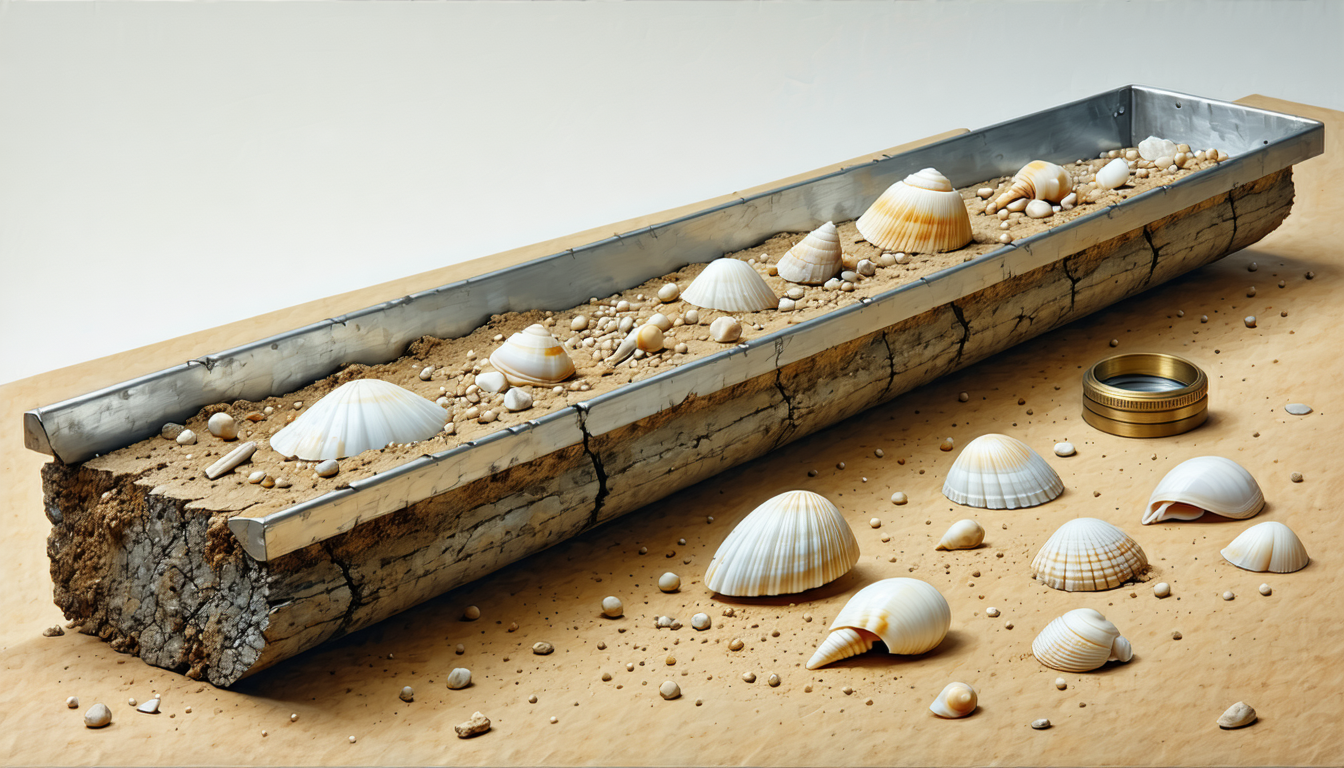
- Dirk Knaust describes more than 20 fossilized vomit pellets, ranging from walnut to mango size, from drill cores taken about 50 kilometres off the Norwegian coast in Geological Magazine.
- The pellets contain bivalve shells, serpulid worm tubes, crinoids and belemnites, all animals with hard parts a plesiosaur's teeth could not have crushed.
- Those shellfish need steady open-ocean salinity, and the sediment that buried the pellets was laid down in a river delta where incoming freshwater kept changing the salt levels.
- Knaust concludes the animals fed on the seafloor in deeper water and swam inshore before bringing the indigestible parts back up as pellets.
- Most of the specimens came out of coring for a subsea CO2 storage site near the Troll gas and oil field.
Why it matters
- What's now possible capability A mismatch between where an animal could have lived and where its shell was buried lets a trace fossil place a behaviour in a specific water depth and salinity, with no skeleton involved.
- What it limits constraint The producer is identified by pellet composition compared against a century of published material, so a reassignment to another marine reptile would change whose behaviour this is while leaving the transport argument standing.
- What it sets up precedent Cores cut for hydrocarbons and CO2 storage are turning into a paleontological archive whose sampling grid is set by reservoir geology. Fossil counts from that grid are hard to read as abundance.
Next story · Science · 2d ago
A Jurassic bird from Fujian had pheasant-like limbs and a sickle-shaped claw typical of deinonychosaursConfirmed6 publishers
Two things can carry a full-marine shell into brackish delta mud: water, or an animal. Storm currents and waves move shells routinely, so the packaging is what Knaust leans on. The shells arrive in clumps that were squeezed together and coated before burial.
Knaust said, "This vomit survived partly because it was so compacted and covered in mucus. Even so, most pellets would have been completely broken up by the waves and tides. Some clusters were, however, quickly covered by sediment arriving from the rivers, and some ended up in burrows left by crustaceans on the seafloor, where they were partially preserved and fossilized." Some of the same cores contain parts of dinosaur footprints, from two-legged predators and long-necked herbivores, so land was close by. phys.org's report describes the fossils as Jurassic.
Assigning a pellet to a producer is harder than finding one. Centimetres from the vomit in one core, Knaust found a bone and coprolites, and a CT scan indicated the bone came from an ichthyosaur. "So then I thought the vomit and feces might have belonged to an ichthyosaur, but it wasn't that simple," he said. "There were many other marine animals to consider, and the composition of their vomit differs." He separated vomit from feces on three grounds: more undigested food remains, a scattered and irregular shape, and a distinctive mineralogy, checked against European and North American material described over the past century. The contents, four invertebrate groups with hard skeletons, point to an animal specialized on hard-shelled prey. The plesiosaur attribution then rests on earlier anatomical work, which has the animal angling its head down to take shellfish off the seafloor, unable to crush shell with its teeth, compacting the debris in its stomach the way an owl does.
Knaust said, "There has been a lot of research into fossilized vomit over the last decade, but most of it has focused on vertebrates eating other vertebrates. This is the first time that plesiosaur vomit, and the shellfish in it, have been identified, and these creatures tell us a great deal."
Over three decades Knaust has worked through several thousand metres of core from North Sea wells operated by Equinor, where he is employed, and this study reports more than 20 pellets. Read "several thousand" at its lowest, 2,000 metres, and the recovery is roughly one pellet per 100 metres of core. The holes were drilled where a subsea CO2 store and a gas field are.
The pellets do not settle whether the inshore trip was the point. Knaust said, "Plesiosaurs may have come close to shore to relax or sleep after hunting, and that's likely when they vomited." On the modern comparison he was explicit: "We see fur seals and marine crocodiles doing something similar today, but while they go onto land, plesiosaurs probably remained submerged due to their weight and shape."
What to watch
- Whether another worker, reading the Geological Magazine figures and core logs, reassigns the pellets to an ichthyosaur or a shell-crushing fish.
- Cores from other North Sea delta intervals that would show whether pellets cluster in shallow-water facies or also turn up in open-marine sediment.
- Any plesiosaur skeletal material recovered from the same wells, which would tie producer to pellet directly.
Clarity's read
What the record supports and how the coverage leans. The claims behind it follow.
Reality
- Evidence50
- Adoption
- Not scored
- Hype gap+20
- Incentives
- Not scored
- Confidence55
Claim ledger
Ranked by verification strength, evidence, and original report placement.
- [1]
Paleontologist Dr. Dirk Knaust published the study in Geological Magazine, published by Cambridge University Press.
- [2]
Knaust identified fossilized plesiosaur vomit pellets in what would have been the shallow waters of river deltas, 50 kilometres (31 miles) off the Norwegian coast.
- [3]
Knaust's analysis covered more than 20 regurgitalites, clumps of fossilized vomit ranging in size from a walnut to a mango.
- [4]
Knaust identified bivalve shells, serpulid shells (hard tube-dwellings built by filter-feeding worms), crinoids (invertebrates attached to the seafloor by a stalk) and belemnites (the hard parts of squid-like cephalopods) in the pellets.
- [5]
The mix of contents pointed to an animal specialized to eat hard-shelled prey.
- [6]
The shellfish Knaust identified in the vomit needed the kind of steady salt levels found in the open ocean to survive.
- [7]
The vomit was deposited in a river delta where incoming freshwater would have continually changed the salt levels, making it impossible for these sensitive creatures to live there.
- [8]
Knaust concluded that plesiosaurs must have eaten the shellfish from the seafloor in deeper water before swimming to shore to vomit up the hard, indigestible parts.
- [9]
Previous research into plesiosaur anatomy and movement suggests the long-necked marine reptile angled its head down to collect shellfish from the seafloor.
- [10]
Plesiosaurs are thought to have been unable to crush shells or other skeletal material with their teeth, so the stomach compacted the material to be vomited as pellets, as animals including owls do today.
- [11]
Knaust said: "There has been a lot of research into fossilized vomit over the last decade, but most of it has focused on vertebrates eating other vertebrates. This is the first time that plesiosaur vomit, and the shellfish in it, have been identified, and these creatures tell us a great deal."
- [12]
Over the last three decades Knaust, a specialist in the fossil traces left by invertebrates, has analyzed several thousand metres of drill core samples taken from North Sea wells operated by his employer, the Norwegian energy company Equinor ASA.
- [13]
The vomit fossils Knaust studied mainly come from the development of a subsea storage site for CO2 in the vicinity of the Troll gas and oil field.
- [14]
Knaust said: "Plesiosaurs may have come close to shore to relax or sleep after hunting, and that's likely when they vomited."
- [15]
Knaust said: "We see fur seals and marine crocodiles doing something similar today, but while they go onto land, plesiosaurs probably remained submerged due to their weight and shape."
- [16]
Knaust said: "This vomit survived partly because it was so compacted and covered in mucus. Even so, most pellets would have been completely broken up by the waves and tides. Some clusters were, however, quickly covered by sediment arriving from the rivers, and some ended up in burrows left by crustaceans on the seafloor, where they were partially preserved and fossilized."
- [17]
Just centimetres away from the fossilized vomit in one core, Knaust found a bone and coprolites; a CT scan indicated the bone must be from an ichthyosaur, a group of marine reptiles similar to but unrelated to dolphins.
- [18]
Knaust said: "So then I thought the vomit and feces might have belonged to an ichthyosaur, but it wasn't that simple. There were many other marine animals to consider, and the composition of their vomit differs."
- [19]
Knaust distinguished vomit from feces by the higher amount of undigested food remains in the vomit specimens, their scattered and irregular shape and their distinctive mineralogy, and compared the fossils to vomit remains discovered over the last century in many parts of Europe and North America.
- [20]
phys.org's report describes the fossils as Jurassic.
- [21]
Knaust and his colleagues have identified parts of dinosaur footprints, from two-legged predators and long-necked herbivores that roamed the nearby delta lands, in some of the extracted cores.
- [22]
Four invertebrate groups with hard skeletal parts were identified in the pellets.
- [23]
Taking 2,000 metres as the low end of "several thousand metres" of core, more than 20 pellets works out at about one pellet per 100 metres of core.
Sources
2 independent publishers whose own reporting we read for this story.
- discovermagazine.comAncient Vomit Found Beneath the North Sea Hints at Where Plesiosaurs May Have Napped After Dinner
1 article · September 22, 2026
- phys.orgQueasy plesiosaurs swam to shore to vomit, Jurassic fossils reveal
1 article · September 22, 2026
Topics and entities
Topics
- Trace fossils and ichnology
- Mesozoic marine reptiles
- Paleontology
Entities
- Cambridge University Press
- Geological Magazine
- Equinor