Short sleep was linked to lower psychological flexibility in a Binghamton survey of 400-plus students
Binghamton University researchers found breakfast, exercise and sleep habits tracked with psychological flexibility in 400-plus college students. The authors say the habits seem to build it, but survey data alone cannot show which came first.
The Scientist · Science desk
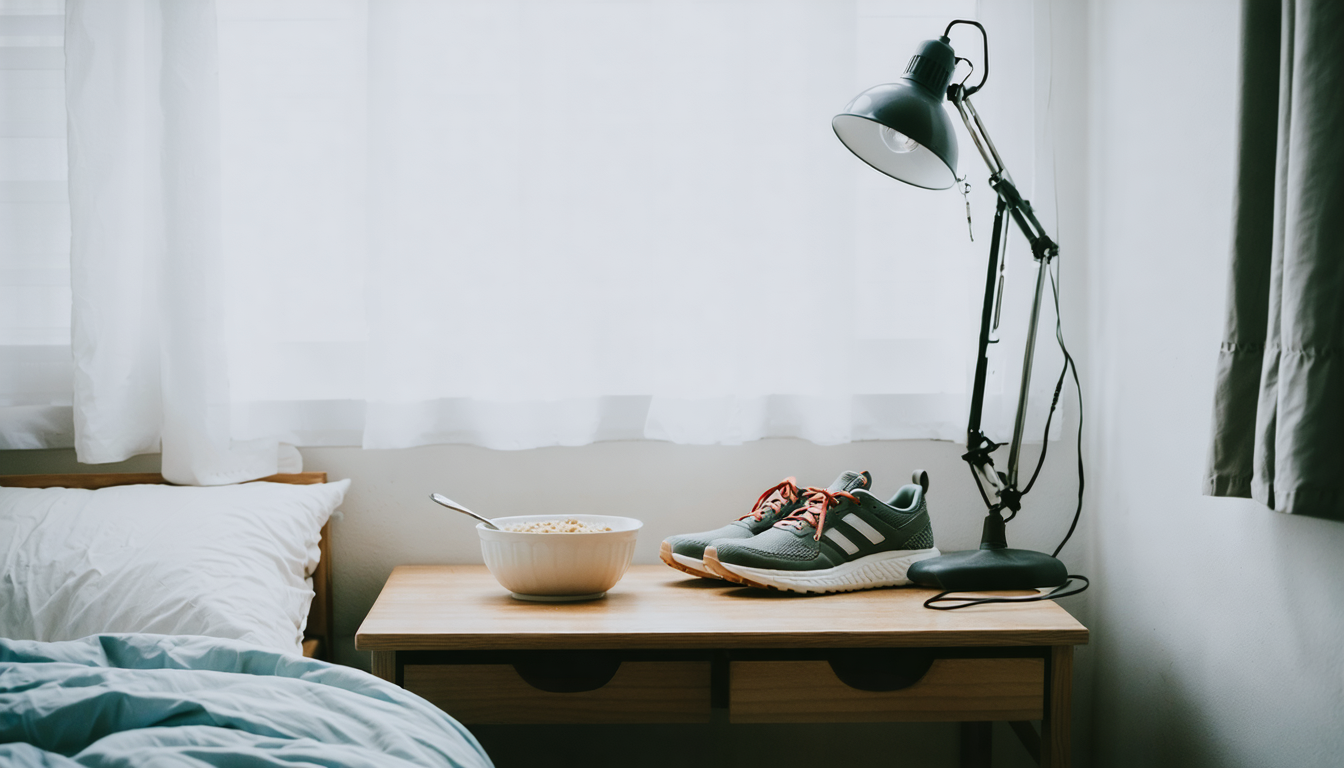
Students who slept less than six hours a night had lower resilience and psychological flexibility. Those who ate breakfast at least 5 times a week showed greater resilience and flexibility. The students surveyed had a mean age of 19.
| Figure | Value | Note | Claim |
|---|---|---|---|
| Sleep a night, less than: lower resilience and flexibility | 6 hours | 5 | |
| Breakfasts, at least | 5 times a week | 3 | |
| Mean age of students | 19 years | 2 |
What happened
- Students who ate breakfast at least five times a week, and those who exercised at least 20 minutes a day, also showed greater resilience alongside psychological flexibility.
- Students who slept less than six hours a night had lower levels of both resilience and psychological flexibility.
- Regular fish oil supplementation was also positively associated with psychological flexibility.
- The researchers concluded that consistent healthy habits seem to improve psychological flexibility, and that flexibility in turn leads to stronger resilience and stress management.
Why it matters
- What doesn't add up contradiction The authors' causal wording, that habits seem to improve flexibility, outruns what an anonymous online survey can establish about which trait came first.
- What it limits constraint The sample is college students around 19, so the result says little about older adults, and a claim about the American diet is a stretch from this data.
- Who has to decide decision A campus program that adds breakfasts or sleep hours to build flexibility would be betting on a middle step this survey did not test; an assigned-intervention trial would settle it first.
Next story · Leadership · 28m ago
David Rosenthal says ChatGPT practiced medicine without a license in advising on his medicationsOne report1 publisher
The paper is in the Journal of American College Health [1]. Its sample is more than 400 college students with a mean age of 19, who answered anonymous online surveys [2]. Discover did not report the group sizes behind each comparison, the effect sizes, or the scales used to score flexibility and resilience. Without those, a reader cannot tell a modest gap on a questionnaire from a large one.
The term itself is concrete. People who are psychologically flexible adjust their emotions and behaviors better when a situation changes unexpectedly [6]. Lina Begdache, the lead author and an associate professor of health and wellness studies at Binghamton, said such people "change the way they think about the situation and then use brain resources to handle the stress" [9][8].
Begdache described the finding as a chain with a direction: "The new finding here is that diet and lifestyle don't just make you resilient by themselves," she said. "They help you build the psychological flexibility, which, in turn, makes you a resilient person." [11]
Anonymous surveys can show that habits and flexibility go together. We think they cannot put the links in order. The survey cannot show whether skipping breakfast makes a student less flexible, or whether a student already rattled by stress is the one who skips breakfast and sleeps too little.
Discover also says the trend holds when the relationship is viewed from the opposite direction, and then describes poor habits, such as regular fast food and too little sleep, as linked to reduced flexibility [7]. That is the same association seen from its low end. It does not test whether flexibility shapes habits.
The sample also limits how far the claim travels. The team's earlier studies, according to Discover, showed that high-quality diets improve resilience and poor diets do the opposite [12]. In a separate press statement, Begdache said: "If we take these findings and translate them into the current American diet, we're not consuming the best quality, which means that this may be affecting our resilience level." [13]
What to watch
- A trial that assigns students to a breakfast or sleep change and measures psychological flexibility before and after.
- The full paper's group sizes, effect sizes and any statistical test of flexibility as the step between habits and resilience.
- A replication in adults outside college, where stress and sleep patterns differ.
Clarity's read
What the record supports and how the coverage leans. The claims behind it follow.
Reality
- Evidence40
- Adoption
- Not scored
- Hype gap+25
- Incentives
- Not scored
- Confidence62
Claim ledger
Ranked by verification strength, evidence, and original report placement.
- [1]
The study by researchers at Binghamton University, New York, was published in the Journal of American College Health.
- [2]
The research team gathered data from more than 400 college students with a mean age of 19 through anonymous online surveys.
- [3]
Participants who ate breakfast at least 5 times a week displayed greater resilience alongside psychological flexibility, as did students who exercised at least 20 minutes per day.
- [4]
The researchers noted a positive association between regular fish oil supplementation and psychological flexibility.
- [5]
Students who slept less than six hours per night had lower levels of both resilience and psychological flexibility.
- [6]
People who are psychologically flexible are better at adjusting their emotions and behaviors when a situation changes unexpectedly.
- [7]
Poor habits, like regularly eating fast food and not getting enough sleep, are linked to reduced flexibility in thinking and acting in stressful situations.
- [8]
Lina Begdache is the lead study author and an associate professor of health and wellness studies at Binghamton University.
- [9]
People who display psychological flexibility "change the way they think about the situation and then use brain resources to handle the stress," Begdache said.
- [10]
The researchers concluded that consistent, healthy habits seem to improve psychological flexibility, which leads to stronger resilience and stress management.
- [11]
"The new finding here is that diet and lifestyle don't just make you resilient by themselves. They help you build the psychological flexibility, which, in turn, makes you a resilient person."
- [12]
Begdache's team's previous studies showed that high-quality diets improve resilience and poor diets do the opposite.
- [13]
"If we take these findings and translate them into the current American diet, we're not consuming the best quality, which means that this may be affecting our resilience level."
Sources
2 independent publishers whose own reporting we read for this story.
- discovermagazine.comPsychological Resilience May Start With Regular Breakfast, Good Sleep, and Daily Exercise
1 article · October 14, 2026
- en.sedaily.comBreakfast, Sleep and Exercise Linked to Mental Resilience, Study Finds
1 article · October 15, 2026
Topics and entities
Topics
- Psychological resilience
- Sleep and health
- Nutrition and mental health
Entities
- Journal of American College Health
- Binghamton University