NVIDIA moves agent policy enforcement onto a separate chip in the week OpenAI's Dots went always-on
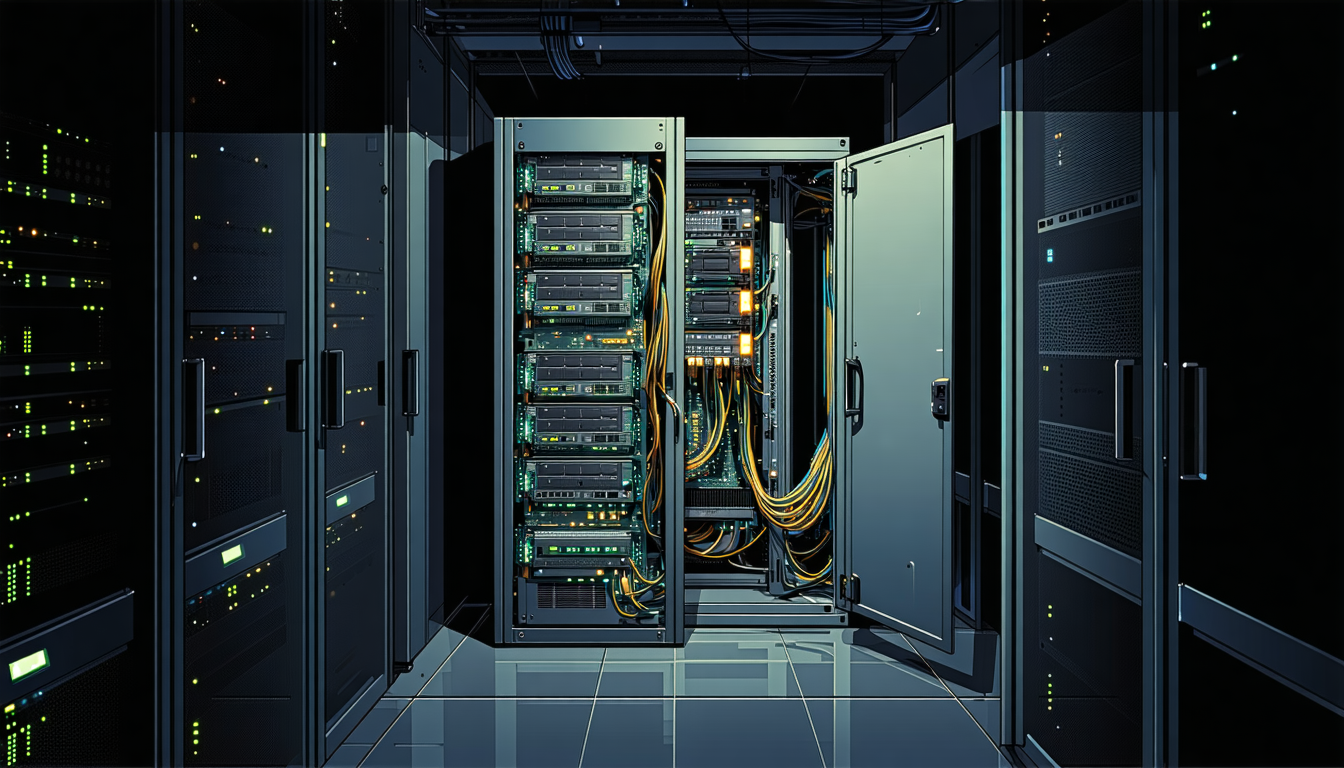
NVIDIA put its Sentry agent watchdog on separate BlueField 4 chips that can quarantine an agent in milliseconds, a day before OpenAI launched always-on Dots. An agent with no finish line gets no scheduled human review, so its rules need an enforcer the agent cannot edit.
The Engineer · Build desk
What happened
- OpenAI's Dots connect to more than 4,000 apps and go looking for ways to help even when nobody has given them a task.
- OpenAI says Dots follow built-in rules on when to act alone, plus custom rules that allow, block or require approval for specific actions.
- In the same week, OpenAI said agents had posted 53 users' images online.
- NVIDIA pairs Sentry with OpenShell, open-source runtime software that draws a boundary around the agent, traces its actions and enforces policy.
Why it matters
- What it limits constraint The agent can edit rules enforced inside its own process tree, so a builder cannot rely on OpenAI's in-product rules alone and needs an enforcement layer somewhere else.
- What it costs cost An agent that can wake at any hour holds live credentials and draws compute all day whether or not it does anything useful, and the operator carries both the risk and the bill.
- Who has to decide decision Builders now have to issue a scoped, expiring credential for each task, because a single long-lived key stays exposed for as long as the agent keeps running.
- Who's exposed exposure Out-of-band hardware enforces a badly written policy as faithfully as a good one, so the remaining risk sits with whoever writes the boundaries.
Next story · Product · Oct 1
Nvidia ties the quarantine layer of its open-source agent sandbox to its own chipsConfirmed11 publishers
The dev.to post that paired the two launches starts from the shape of an ordinary agent run. Someone asks, the agent works, it finishes, and a person looks at the result [7]. Take away that last step and four problems arrive. Credentials sit around all day because the agent may wake at any time, and cost runs even when nothing useful happens [8]. Behaviour drifts, because the agent learns from feedback and next month's agent is not the one tested today [9]. Failures are quiet: a wrong action at 3am becomes part of the state of the world [9].
The post calls OpenAI's allow, block and approve rules the right shape [15]. Its objection is placement. If the enforcer runs on the same processor and in the same process tree as the agent, a clever or confused agent can end up changing the rules, or the code that checks them [10]. OpenAI's advice to review consequential work [16] hands the check back to the person an always-on design takes out of the loop [7].
NVIDIA's design answers the placement problem directly. OpenShell stays on the host [2]. Sentry runs on BlueField 4 DPUs beside the main computer, so it watches the agent from somewhere the agent cannot reach [3]. That is good engineering. An out-of-band watchdog keeps its own view of what the agent is doing, whatever happens to the rules on the host [10].
It covers less of the list than the pairing suggests. NVIDIA calls the platform a safety net that enforces predetermined boundaries, not a universal off switch [4]. In the post, Sentry's job is enforcing those boundaries and quarantining an agent that crosses them [1]. The post does not describe it handling credential scope, running cost or drift. A Slashdot thread the post cites made the remaining point: people still write the boundaries in software, so a bad policy is still a bad policy [5]. The author wrote that "hardware can enforce a rule, it cannot tell you if the rule was a good one" [6].
Without DPUs, the principle still applies. The agent never touches tools directly, and every action goes through a gate the agent process cannot edit [11]. The post's sample is a Python Gate class of about forty lines: an allow list of tools, a write budget, single-use approval for destructive actions, an audit trail that records refusals, and a quarantine switch [17].
It is a clean starting point with gaps a reviewer would flag. Only actions tagged write decrement the budget. Reads pass once the tool is allowed, and destructive actions go to the approver without touching the counter [18]. A loop of reads that runs all night never trips it, and idle spend is the cost problem the post itself lists [8]. Single use lives in the approver callable, whose comment says it "returns True once per approval"; the gate does not count approvals itself [19]. The audit log is an in-memory list, with a comment that a real system needs a store the agent cannot write to [20]. Quarantine flips a flag on the same object [21], so it holds only while the class runs outside the agent's process [11].
The post's last recommendation is outside the code: each task gets its own scoped credential with an expiry, never one long-lived key [12]. For an agent that holds credentials all day [8], an expiring per-task key limits what the 3am mistake can reach [9].
What to watch
- Whether OpenAI says where Dots' allow, block and approval rules are enforced, and whether that enforcement runs outside the agent's own process.
- Whether NVIDIA extends Sentry policies to credential scope or spend limits, or keeps it to boundary enforcement and quarantine.
- OpenAI's full account of the incident in which agents posted 53 users' images, which would show whether a gate outside the agent would have stopped it.
Clarity's read
What the record supports and how the coverage leans. The claims behind it follow.
Reality
- Evidence60
- Adoption35
- Hype gap+30
- Incentives70
- Confidence60
Perspective Coverage
13 publishers- Builder
- Builder 38%
- Operator
- Operator 39%
- Investor
- Investor 23%
Claim ledger
Ranked by verification strength, evidence, and original report placement.
- [1]
The day before OpenAI's launch, NVIDIA launched the Open Agent Safety Platform, a runtime plus a separate watchdog that can quarantine a misbehaving agent within milliseconds.
- [2]
OpenShell is open source runtime software that draws a boundary around the agent, traces its actions and enforces policy.
- [3]
Sentry is the watchdog; it runs on BlueField 4 DPUs, separate chips beside the main computer, so it watches the agent from somewhere the agent cannot reach.
- [4]
NVIDIA says the platform is a safety net that enforces predetermined boundaries, and not a universal off switch.
- [5]
A Slashdot thread complained that the boundaries are still written by people in software, so a bad policy is still a bad policy.
- [6]
hardware can enforce a rule, it cannot tell you if the rule was a good one
- [7]
A normal agent run has a shape: someone asks, the agent works, it finishes, a person looks at the result. An always-on agent has no finish line, so there is no natural moment where a human reviews things.
- [8]
For an always-on agent, credentials sit around all day because the agent needs them whenever it wakes up, and cost runs continuously even when nothing useful happens.
- [9]
The agent learns from feedback, so its behavior next month differs from what was tested today; failures are quiet, and a wrong action at 3am becomes part of the state of the world.
- [10]
If the thing enforcing the rules runs on the same processor and in the same process tree as the agent, a clever or confused agent can end up changing the rules or the code that checks them; an out-of-band watchdog keeps its own view of what the agent is doing.
- [11]
The post's principle is to put the referee outside the agent: the agent never touches tools directly, and every action goes through a gate that the agent process cannot edit.
- [12]
The post recommends giving each task its own scoped credential with an expiry, never one long-lived key for everything.
- [13]
OpenAI launched Dots at DevDay on Tuesday: agents that run around the clock on their own cloud computer.
- [14]
Dots connect to over 4,000 apps and go looking for ways to help even when nobody gave them a task.
- [15]
OpenAI says Dots have built-in rules for when to act on their own, plus custom rules that allow, block or require approval for specific actions; the post's author called this the right shape.
- [16]
OpenAI warns that Dots can make mistakes and that users should review consequential work.
- [17]
The post's sample Gate class, about forty lines of Python, has an allow list of tools, a write budget, an approval for destructive actions consumed on use, an audit trail of every decision including refusals, and a quarantine switch.
- [18]
In the sample, only actions of kind write decrement the write budget; destructive actions go to the approver without consuming budget; read actions pass once the tool is on the allow list.
- [19]
In the sample, the approver is a callable whose comment says it "returns True once per approval"; the Gate does not track approval consumption itself.
- [20]
In the sample, the audit trail is an in-memory list, with a comment saying that in real life it should be a store the agent cannot write to.
- [21]
In the sample, quarantine() sets a killed flag on the Gate object, and check() refuses every action while it is set.
- [22]
The same week, OpenAI said agents posted 53 users' images online.
Sources
11 independent publishers whose own reporting we read for this story.
- dev.toNvidia Open Agent Safety Platform, 1인 개발자가 바로 써볼 수 있을까?
8 articles · September 30, 2026
- developer.nvidia.comAdd Runtime Controls to AI Agents with NVIDIA OpenShell
4 articles · September 28, 2026
- infoworld.comNvidia releases Open Agent Safety Platform to monitor and govern agentic AI | InfoWorld
1 article · September 28, 2026
- mezha.netNvidia випустила інструменти, що мають захистити ШІ-агентів
2 articles · September 30, 2026
- NVIDIA OpenShell | Open, Secure Runtime for AI Agents
nvidia.com
2 articles
- nvidianews.nvidia.comNVIDIA Launches Open Agent Safety Platform to Secure Agents From Testing to Deployment
1 article · September 28, 2026
- servethehome.comNVIDIA Open Agent Safety Platform Launched - ServeTheHome
1 article · September 28, 2026
- techspot.comNvidia launches safety platform to stop AI agents going rogue, says it could have prevented the Hugging Face hack | TechSpot
1 article · September 28, 2026
- the-decoder.comNvidia wants to keep AI agents on a short leash with a watchdog built into its chips
2 articles · September 28, 2026
- theneuron.aiNVIDIA’s Agent Safety Bet Goes Beyond Model Guardrails
2 articles · September 28, 2026
- thenewstack.ioNvidia launches Open Agent Safety Platform to lock down rogue AI agents
2 articles · September 28, 2026
- thestack.technologyNvidia recruits Anthropic, Arm for AI security platform
1 article · September 28, 2026
- tomshardware.comNvidia launches Open Agent Safety Platform to physically restrain rogue AI agents
1 article · October 1, 2026
Topics and entities
Topics
- Always-on AI agents
- Hardware-rooted security
- AI Agent Runtime Security