Microsoft plans to license the weights of its 2.8T-parameter MAI-Base-2 through Foundry
Microsoft AI says its 2.8-trillion-parameter MAI-Base-2 will let it license model weights to trusted partners through Foundry. It also says it tunes its models first for its own products and then for Foundry customers, so licensees would come second.
The Board Room · Leadership desk
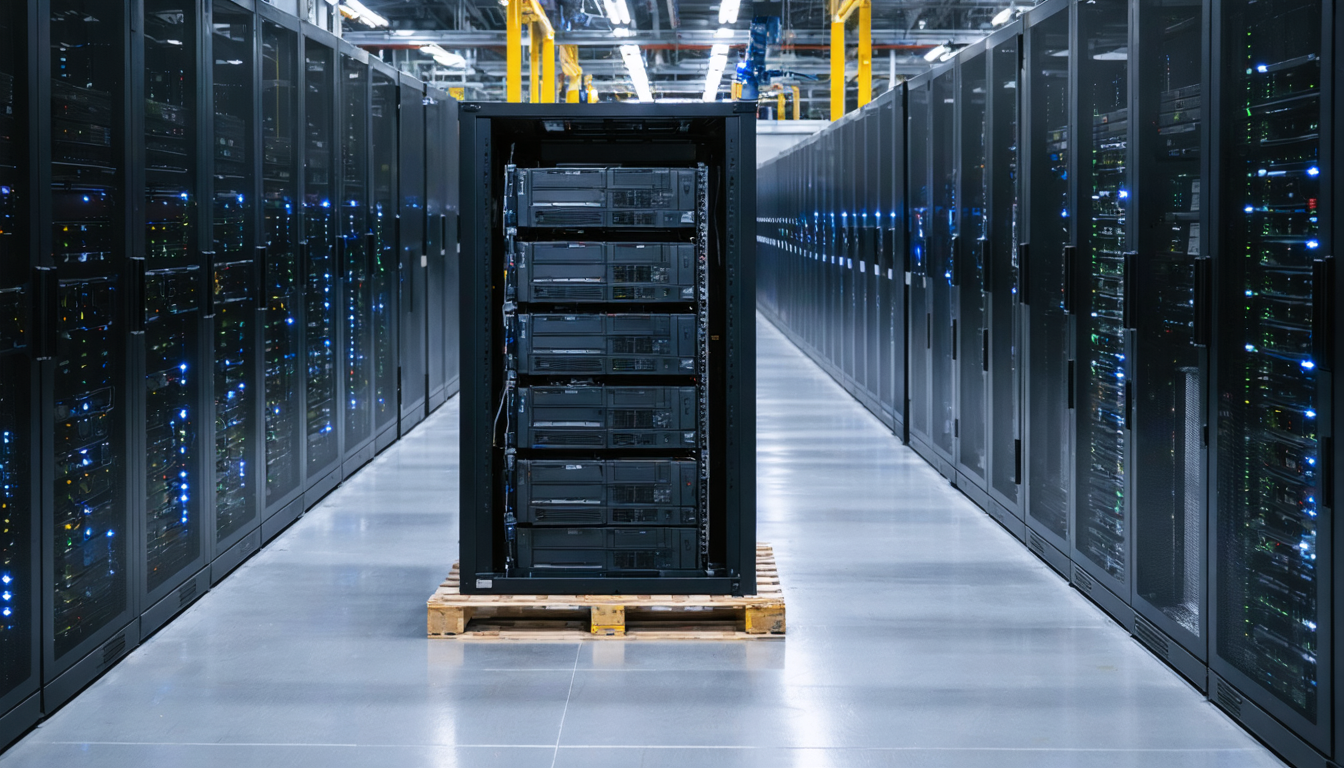
Microsoft AI says MAI-Base-2 is at least 4x more pre-training FLOPs-efficient than DeepSeek-V4-Pro-Base, with a range up to 12x. Suleyman said it used 12 times less computation than DeepSeek, without naming the model. MAI-Base-2 has 2.8 trillion total parameters.
| Figure | Value | Note | Claim |
|---|---|---|---|
| More pre-training FLOPs-efficient than DeepSeek-V4-Pro-Base | 4 x, at least | Microsoft AI range: 4–12x | 18 |
| Computation vs DeepSeek, per Suleyman | 12 times less | DeepSeek model not specified | 19 |
| Total parameters, MAI-Base-2 | 2.8 trillion | 2 |
What happened
- MAI-Base-2 is a mixture-of-experts model that activates 80 billion of its parameters for any given token.
- Microsoft says it trained the model on 16k GB200 GPUs over 38 days in August and September 2026.
- Microsoft AI says the model is 4-12x more pre-training FLOPs-efficient than DeepSeek-V4-Pro-Base, the strongest open base model.
- Business Insider reported that Suleyman told a Thursday town hall the model was privately tested against OpenAI models, including one nicknamed "Spud".
Why it matters
- Who has to decide decision An enterprise already buying OpenAI models through Azure would have a Microsoft-made alternative to price against them, once Microsoft sets terms.
- What doesn't add up contradiction Suleyman's figure of 12 times less computation than DeepSeek matches only the top of Microsoft's published range, and he did not say which DeepSeek model he meant, so the blog's lower bound is the safer reference.
- What it limits constraint The no-distillation claim is the license's main selling point, and the sources show it resting on Microsoft's own statement, so a partner would be buying on Microsoft's word until someone else verifies it.
Next story · Build · Oct 1
Microsoft's MAI speech lineup documents real-time use only on the voice-output sideConfirmed7 publishers
The license is the part of the post a buyer can act on, and the post words it as a plan. Microsoft AI wrote: "Our pre-training is built on organic data which does not involve distillation from other models." [4] That, it said, "will enable us to license our model weights to trusted partners through Foundry" [1]. Microsoft did not publish a release date, license terms, or the hardware a licensee would need to serve a model of this size. Until it does, an enterprise buyer is weighing an intention.
Microsoft is already a first-party model maker. It announced MAI-Thinking-1 in June, post-trained on top of MAI-Base-1 [7]. Business Insider reports that Microsoft also offers OpenAI models to its Azure cloud customers and has used them in Copilot [12], and that the relationship with OpenAI has frayed over the past year or so as Microsoft has worked on models of its own [14]. What a weights license would add is a channel in which partners receive the model itself [1]. We do not yet know whether that makes Microsoft a supplier in revenue terms or only in intent.
The tradeoff is with OpenAI. Mustafa Suleyman, who runs Microsoft AI, told staff: "We now have a stronger pre-trained base model than the model that currently powers GPT 5.6 Sol," and added that Microsoft "used one-quarter of the compute that OpenAI used to train their model" [20]. Business Insider noted that Microsoft owns a stake in OpenAI that is likely worth more than $100 billion, and that criticism of OpenAI could dent the value of that investment [11]. Microsoft declined to comment and OpenAI did not respond [13]. In our view, Microsoft's interest as an OpenAI shareholder and its interest as a prospective licensor of a competing model now point in different directions.
A skeptic would say Microsoft is grading its own paper. Some of that holds. Microsoft says MAI-Base-2 achieves lower bits-per-byte than the other models it tested [10]. But the held-out code set is Microsoft's own codebase [8], and Kimi K3, Qwen3.8-2.4T-A95B and MiMo-V2.6-Pro-RL were available only as post-trained checkpoints, which Microsoft says may affect the results [9]. The comparison with OpenAI rests on technical information Microsoft has about OpenAI's models, Suleyman said [21]. Against that, the STEM, math and Q&A sets were commissioned from vendors to reduce contamination risk, and Microsoft says it decontaminated all evaluation sets against its training data [8].
Efficiency is the headline figure, but Microsoft did not take it as a saving. Business Insider wrote that pre-training takes massive amounts of expensive computing power, so Microsoft could save money if it has found a way to do it more efficiently [15]. The post says "we have put that saving into training a larger model" [18]. MAI-Base-2 has 2.8 trillion total parameters against 80 billion active, about 35 to 1 [17], and Microsoft describes it as larger and sparser than MAI-Base-1 [16].
What to watch
- Whether Microsoft publishes a Foundry availability date, license terms or the first named licensees for MAI-Base-2.
- The post-training results Microsoft promised, which would show what a licensed, tuned version of the model can do.
- Whether OpenAI responds to Suleyman's comparison and one-quarter compute figure, which it did not address when Business Insider asked.
Clarity's read
What the record supports and how the coverage leans. The claims behind it follow.
Reality
- Evidence45
- Adoption
- Not scored
- Hype gap+30
- Incentives70
- Confidence60
Claim ledger
Ranked by verification strength, evidence, and original report placement.
- [1]
Microsoft AI says its organic-data, no-distillation pre-training "will enable us to license our model weights to trusted partners through Foundry."
- [2]
MAI-Base-2 is a mixture-of-experts (MoE) foundation model with 80 billion active and 2.8 trillion total parameters.
- [3]
Microsoft trained MAI-Base-2 on 16k GB200 GPUs over 38 days in August and September 2026.
- [4]
Microsoft AI wrote: "Our pre-training is built on organic data which does not involve distillation from other models." It also says Microsoft has strong data provenance over the training tokens.
- [5]
Microsoft AI says owning the full stack lets it tune its models and infrastructure together for the best performance at the lowest cost, "first in our own products and then for Foundry customers."
- [6]
MAI-Base-2 is currently undergoing post-training, and Microsoft AI says it looks forward to sharing more results soon.
- [7]
In June Microsoft announced MAI-Thinking-1, a general-purpose foundation model post-trained on top of MAI-Base-1.
- [8]
For held-out code evaluation Microsoft uses MAI's own codebase, while STEM, Math and Q&A evaluations are commissioned from vendors to reduce the risk of training-set contamination; Microsoft says it also decontaminated all evaluation sets against its training data.
- [9]
Only post-trained checkpoints are available for Kimi K3, Qwen3.8-2.4T-A95B and MiMo-V2.6-Pro-RL, and Microsoft reports their results with the caveat that post-training may affect the evaluations.
- [10]
Microsoft says that across its held-out evaluations MAI-Base-2 achieves lower bits-per-byte than the other models it tested.
- [11]
Business Insider says Microsoft owns a stake in OpenAI that is likely worth more than $100 billion, and that any criticism of OpenAI could potentially dent the value of that investment.
- [12]
Microsoft offers OpenAI models to its Azure cloud customers and has used OpenAI models for its own products such as Copilot.
- [13]
Microsoft declined to comment and OpenAI did not respond to a request for comment on Thursday.
- [14]
The relationship between Microsoft and OpenAI has frayed in the past year or so, and Microsoft has increasingly tried to branch out from OpenAI, including by working on its own models.
- [15]
Business Insider wrote that pre-training takes massive amounts of expensive computing power, so Microsoft could save money if it has worked out a way to do this more efficiently.
- [16]
MAI-Base-2 is a larger, sparser model than MAI-Base-1, trained on more data.
- [17]
MAI-Base-2 has about 35 total parameters for each active parameter.
- [18]
Microsoft AI says MAI-Base-2 is 4-12x more pre-training FLOPs-efficient than the strongest open base model, DeepSeek-V4-Pro-Base, and that "we have put that saving into training a larger model."
- [19]
Suleyman said the new model used "12 times less computation than was used for DeepSeek, for example, on compute efficiency," and did not specify which DeepSeek model.
- [20]
At a Thursday town hall, Mustafa Suleyman said: "We now have a stronger pre-trained base model than the model that currently powers GPT 5.6 Sol. And in fact, we used one-quarter of the compute that OpenAI used to train their model."
- [21]
Suleyman said Microsoft privately tested the model against OpenAI models, including one nicknamed "Spud" that powers GPT-5.6, found it performed better on tests of how well AI can understand and predict patterns, and based the comparisons on technical information Microsoft has about OpenAI's models.
Sources
2 independent publishers whose own reporting we read for this story.
- businessinsider.comMicrosoft AI chief says the company beat OpenAI at its own game, using a quarter of the computing power
1 article · October 15, 2026
- Microsoft unveils MAI-Base-2, a MoE model with 2.8T total and 80B active parameters, claiming 4x-12x more pretraining FLOPs-efficiency than DeepSeek-V4-Pro-Base
microsoft.ai
1 article · October 15, 2026
Topics and entities
Topics
- Microsoft–OpenAI relationship
- Model weight licensing
- Foundation model pre-training
Entities
- OpenAI
- Business Insider
- DeepSeek-V4-Pro-Base
- Microsoft AI
- Mustafa Suleyman
- Microsoft Foundry