Two protocols supply nine-tenths of crypto's record $640M buyback spend
The aggregate says buybacks buy nothing, which is true of the median program and false of the two protocols that are almost all of the spending, one of them up 145% in a market down 11.9%.
The Investor · Invest desk
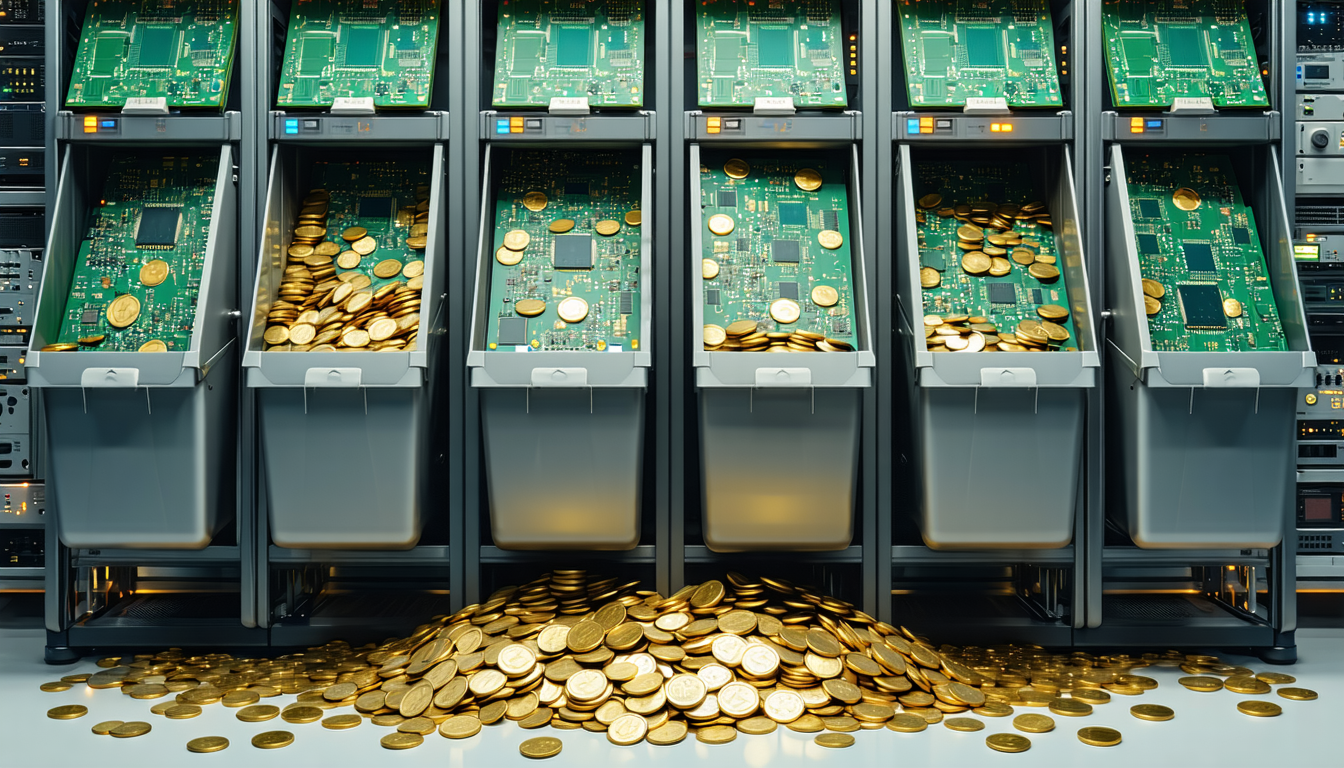
What happened
- Crypto protocols spent a record $640M on token buybacks, a tool that has moved from a few high-fee platforms into base layer chains and top DeFi protocols.
- Tokenomist found that of 11 programs with clean on-chain data, Jupiter moves repurchased tokens into a trust and Aster returns them to stakers, so neither reduces circulating supply.
- A Bitwise memo has Hyperliquid running about 99% of more than $800M of annual revenue through buy-and-burn, retiring some $1.3bn of HYPE since November 2024.
Why it matters
- What doesn't add up contradiction Cryptopolitan reads the roughly $640M as a record spend proving the strategy has gone mainstream, while the FT chart labels $638M as year-to-date through Aug 25, and which label holds decides whether protocol buying is multiplying or running below last year's pace.
- What it limits constraint Sokolin's scale test forecloses the mechanic for most tokens, because a buyback only reaches the price when revenue is large relative to float turnover, which is a property of the fee business rather than a treasury policy anyone can adopt.
- Who has to decide decision A 99% payout ratio commits Hyperliquid to funding nothing else out of fees, so its growth from here has to come from the order book rather than from anything $800M of retained revenue could have bought.
- Who's exposed exposure With no legal claim on protocol cash flow, holders who value a token off its buyback yield are exposed to a discretionary spending line rather than to a contract, which is the part of the equity analogy that does not carry over.
Next story · Invest · 2h ago
Pump.fun routes BTC and ETH perps into Hyperliquid's books at up to 40x leverageConfirmed2 publishers
Strip out the two names and the record stops looking like an adoption curve. Nearly 90% of the $638M that the Financial Times, working from Allium Labs data, attributes to token buybacks belongs to Hyperliquid and Pump.fun [23], which leaves roughly $64M for every base layer chain and blue-chip DeFi treasury that has since taken up the mechanic [27]. The concentration is also not new: in August 2025 weekly repurchases ran near $40M, with Hyperliquid at about $24M and Pump at about $10M [6], or 85% of the week between them [21].
Lex Sokolin of Generative Ventures put the scaling problem plainly, saying a $100M annual program is irrelevant against $20M of daily trading [8], which is about $274,000 a day of buying against $20M of turnover, call it 1.4% of the flow [17]. Amir Hajian of Keyrock adds the other side of the ledger, where unlocks and constant emissions undermine whatever the buyback bids for [9]. That ratio, not the treasury policy, decides whether a buyback is a bid or a press release.
So the aggregate is the wrong instrument. Dollar-weighted, the trade worked: HYPE is up 145% and PUMP 109% year to date while bitcoin fell 10% and total crypto market capitalisation fell 11.9% [15], a spread of roughly 157 points between HYPE and the market it trades in [19]. Equal-weighted it did not, and the tokens that stayed flat or fell through 2025 despite active programs [4] are the ones whose revenue is small relative to their float turnover.
This is probably wrong, but the mechanism I would bet on is that buyback spend works as the cleanest public proxy for revenue, and revenue is what got repriced. Hyperliquid runs about 99% of more than $800M of annual revenue through buy-and-burn and has retired some $1.3bn of HYPE since November 2024 [25]; its own second-quarter print, $169M of revenue and $141M directed at HYPE [26], is 83% [28], or rather the more interesting version, a payout ratio that moves with the quarter rather than a constant. Pump.fun's half of $420M annualised revenue is nearer $210M a year [2][16]. Bitwise's Matt Hougan said in August that valuations could double in two years as protocols route revenue this way [29], which is the same claim with the causation running the other direction.
Hyperliquid funds nothing else with that revenue, because 99% leaves no room for an incentives budget or a treasury buffer. And the structural break with equities is that most token holders have no legal claim on protocol cash flow, so retiring float does not concentrate ownership the way a share repurchase does, per Hajian [10]. Tokenomist's wider count of $18.8bn across 27 tokens from January 2025 to July 2026, of which buybacks were only about $2.8bn [7], puts purchases at roughly 15% of the story [18]; of 11 programs with clean on-chain data, Jupiter parks repurchases in a trust and Aster hands them to stakers, so neither shrinks supply [12], and among newer emission tokens only BNB and RAY actually did [13].
What would prove this wrong is cheap to specify. If HYPE and PUMP roll over while revenue and buyback spend hold, the scale story survives and my revenue-proxy read dies. And if the $638M really is year-to-date through Aug 25 [24], it annualises near $986M against $1.4bn of buybacks in 2025 [3][20], and the spending is shrinking.
What to watch
- Whether the next Allium Labs cut shows the non-Hyperliquid, non-Pump.fun share of buyback spend rising above the current tenth.
- Hyperliquid's next quarterly revenue print, and whether the payout ratio sits nearer the 83% it actually paid in Q2 than the 99% it advertises.
- Whether Jupiter's trust holdings or Aster's staker distributions are ever converted into burns, the only treatment Tokenomist counts as supply reduction.
Information, not investment advice. This story is general information about companies and markets, drawn from cited reporting. It is not a recommendation to buy, sell or hold any security; check the cited sources before acting.
Clarity's read
What the record supports and how the coverage leans. The claims behind it follow.
Reality
- Evidence54
- Adoption68
- Hype gap+28
- Incentives74
- Confidence55
Claim ledger
Ranked by verification strength, evidence, and original report placement.
- [1]
Pump.fun spends half of each dollar earned buying back and burning PUMP, and says $442 million of the token has been burned, more than 16% of total supply.
- [2]
Pump.fun allocates about 50% of net protocol revenue to token repurchases and has $420 million in annualised revenue based on average daily revenue over the past 90 days.
- [3]
According to CoinGecko data, protocols bought back over $1.4 billion of their tokens throughout 2025.
- [4]
Several tokens with an active buyback program remained stagnant or decreased through 2025.
- [5]
Token unlocks, emissions and heavy selling pressure can overwhelm buyback demand.
- [6]
In August 2025, weekly protocol repurchases were around $40 million, of which Hyperliquid was about $24 million and memecoin launchpad Pump about $10 million.
- [7]
Tokenomist counts approximately $18.8 billion of buybacks and burns by 27 active tokens from January 2025 to July 2026, of which burns were more than 80% and buybacks, including HYPE and PUMP, were almost $2.8 billion.
- [8]
Lex Sokolin, co-founder of Generative Ventures, said token buybacks create far less demand than there is selling pressure, and that a $100 million a year buyback program does not matter against $20 million being traded daily.
- [9]
Amir Hajian of Keyrock says unlocks together with constant emissions can undermine the demand created by buybacks.
- [10]
Hajian says most token holders have no legal claim on the protocol's cash flow, and while burned tokens may reduce the float they do not concentrate ownership the way a corporate stock buyback does.
- [11]
Rob Hadick of Dragonfly said that if selling exceeds buying, market prices will fall.
- [12]
Tokenomist examined 11 initiatives with clean on-chain data and found Hyperliquid burns repurchased HYPE and Pump.fun burns repurchased PUMP, while Jupiter puts repurchased tokens in a trust and Aster returns them to stakers, so neither Jupiter nor Aster reduces circulating supply.
- [13]
Tokenomist found that among new emission tokens, only BNB and RAY have undergone an actual reduction in supply.
- [14]
Uniswap's December 2025 UNIfication vote activated protocol fees and burned about $590 million of UNI in one move.
- [15]
HYPE rose 145% and PUMP rose 109% year-to-date while bitcoin fell 10% and total crypto market capitalisation declined 11.9% over the same period, according to TradingView data.
- [16]
Half of Pump.fun's $420 million annualised revenue is about $210 million a year of repurchases.
- [17]
A $100 million annual buyback is about $274,000 of daily buying, roughly 1.4% of $20 million of daily turnover.
- [18]
Buybacks are about 15% of Tokenomist's $18.8 billion buyback-and-burn total, the rest being burns.
- [19]
HYPE's year-to-date gain exceeds the total crypto market capitalisation move by roughly 157 percentage points.
- [20]
If $638 million covers Jan. 1 to Aug. 25, that annualises to about $986 million, below the more than $1.4 billion of buybacks recorded in 2025.
- [21]
Hyperliquid and Pump together were about 85% of weekly protocol repurchases in August 2025.
- [22]
Crypto protocols spent an all-time high of $640 million on token buybacks, a tool that has moved from a few high-revenue protocols into base layer chains and top DeFi protocols.
- [23]
The Financial Times, citing Allium Labs data, attributes nearly 90% of a record $638 million of crypto token buybacks to Hyperliquid's HYPE and Pump.fun's PUMP.
- [24]
The FT and Allium Labs chart is labelled as crypto project spend on token buybacks, year-to-date leading up to Aug. 25.
- [25]
Hyperliquid uses roughly 99% of its more than $800 million in yearly revenue to buy and burn HYPE, and has removed around $1.3 billion from circulation since it began operations in November 2024, per a Bitwise memo.
- [26]
Hyperliquid reported $169 million in second-quarter revenue on Aug. 6 and directed $141 million toward HYPE buybacks.
- [27]
If Hyperliquid and Pump.fun are nearly 90% of $638 million, the remaining protocols account for roughly $64 million of the total.
- [28]
Hyperliquid's second quarter payout ratio was about 83%, below the roughly 99% headline figure.
- [29]
Bitwise chief investment officer Matt Hougan said earlier in August that crypto valuations could double in the next two years as protocols increasingly use revenue to fund token buybacks and burns.
Sources
2 independent publishers whose own reporting we read for this story.
- cointelegraph.comHyperliquid, Pump.fun account for nearly 90% of record $638M crypto buybacks: FT
1 article · August 31, 2026
- cryptopolitan.comCrypto token buybacks hit record $640M, but the market barely notices
1 article · August 31, 2026
Topics and entities
Topics
- Crypto Market Structure
- Protocol Revenue and Value Accrual
- Tokenomics Design
- Token Buybacks