Ex-Super Micro contractor admits diverting Nvidia AI servers to China in a $2.5 billion scheme
Ting-Wei Sun, a former Super Micro contractor, pleaded guilty to diverting Nvidia AI servers to China in a scheme prosecutors put at $2.5 billion. The case puts the gap in US chip controls at front buyers and forged paperwork, and every server seller now pays to check for both.
The Investor · Invest desk
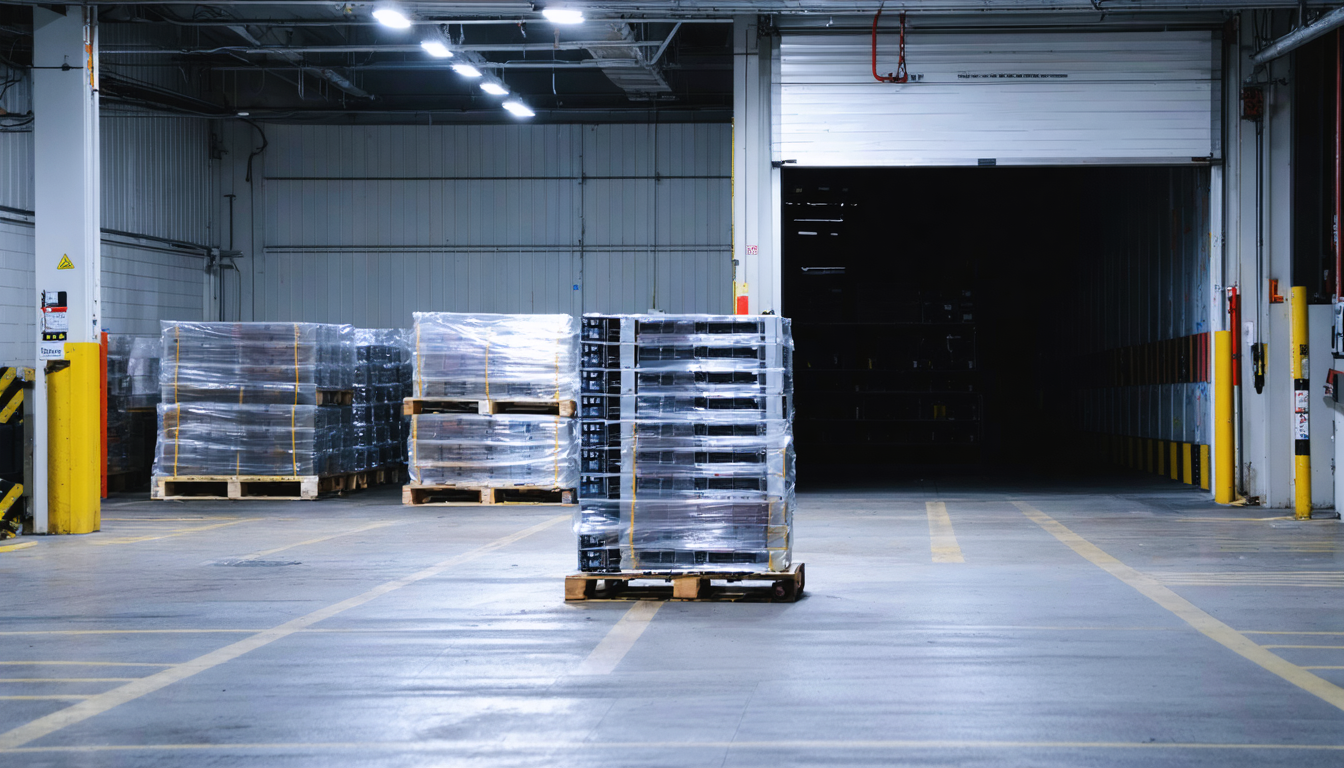
Sun pleaded guilty to four charges over Nvidia AI servers sent to China. Allegations against Liaw and Chang are unproven. Super Micro is not charged and is cooperating. BIS: licensing can hinge on a buyer's headquarters or ultimate parent. CSIS: lost China sales would hurt US chipmakers.
- Who's exposed exposure Ting-Wei Sun, ex-contractor Pleaded guilty in Manhattan federal court to four charges tied to illegally sending Nvidia AI servers to China, claim 1
- Who's exposed exposure Liaw and Chang Allegations against them remain unproven in the case before US District Judge Edgardo Ramos, claim 8
- Who has to decide decision Super Micro Not charged; put both employees on leave, ended Sun's contract and said it was cooperating, claim 2
- What it limits constraint Overseas buyers BIS guidance says licensing can apply depending on where their headquarters or ultimate parent company is located, claim 9
- What it costs cost US chipmakers CSIS warned any drop in sales in China would hurt their revenues and research and development budgets, claim 14
| Who | How | Kind | Claim |
|---|---|---|---|
| Ting-Wei Sun, ex-contractor | Pleaded guilty in Manhattan federal court to four charges tied to illegally sending Nvidia AI servers to China | exposure | 1 |
| Liaw and Chang | Allegations against them remain unproven in the case before US District Judge Edgardo Ramos | exposure | 8 |
| Super Micro | Not charged; put both employees on leave, ended Sun's contract and said it was cooperating | decision | 2 |
| Overseas buyers | BIS guidance says licensing can apply depending on where their headquarters or ultimate parent company is located | constraint | 9 |
| US chipmakers | CSIS warned any drop in sales in China would hurt their revenues and research and development budgets | cost | 14 |
What happened
- To hide the shipments, the defendants allegedly falsified paperwork, repackaged servers and set up dummy equipment to fool inspectors.
- Super Micro has not been charged, and in March it put both employees on leave, ended Sun's contract and said it was cooperating.
- In a separate, unconnected case, the Justice Department said on October 1 that Greg Lui allegedly smuggled over $300 million of restricted servers to China.
Why it matters
- What it costs cost BIS now ties licensing to where a buyer's headquarters or ultimate parent sits, so sellers have to check who owns a customer as well as where the boxes ship, and that checking cost lands on every reseller.
- Who's exposed exposure With a co-founder among the defendants, the Liaw trial will decide whether this stays a case about individuals or becomes a question about Super Micro's own sales controls.
- What it limits constraint Case-by-case licensing for chips like the H200 can only sort approved buyers from blocked ones if end-user records are true, and this case shows a pass-through company can fake them.
Next story · Invest · Oct 4
DOJ's $300 million GPU case casts a California reseller's suppliers as the deceived partyConfirmed20 publishers
On prosecutors' numbers, at least 20.4% of what the Southeast Asian intermediary bought reached China in a few weeks of 2025. That is $510 million out of nearly $2.5 billion in servers purchased across 2024 and 2025, according to Cryptopolitan's account of the case [15][3][4]. The intermediary's job, prosecutors say, was to hide who the Chinese buyers were [3].
The cover was paperwork. FBI official James Barnacle said the defendants allegedly "fabricated documents, staged bogus equipment to pass audit inventories, and used a pass-through company" to hide what they were doing [6].
Each of those tricks defeats a check that trusts what the buyer shows the seller. BIS has been moving its test toward ownership instead. Its May 2026 guidance says licensing requirements can apply to an overseas buyer depending on where its headquarters or ultimate parent company sits [9]. An earlier advisory flagged suspicious intermediaries, sudden jumps in orders, concealed ownership and data centers without the infrastructure to run what they buy [10].
The sudden-order flag is the hardest one to use right now. TrendForce expects AI-server shipments to grow almost 31% this year [12]. Capital spending by the nine largest cloud providers is set to rise about 90%, to more than $886.7 billion [13]. The intermediary's whole two-year purchase total comes to about 0.3% of that single year of spending [16]. When every buyer's orders are rising, one buyer's jump is harder to spot.
Washington's policy choice puts more weight on the records. In January BIS began case-by-case licensing for Nvidia's H200, AMD's MI325X and similar chips [11], so some sales stay open. In September CSIS warned that lost China sales would cut US chipmakers' revenue and research budgets [14]. Washington is licensing these chips buyer by buyer and leaving outright bans aside. Enforcement therefore depends on knowing which buyer is real, and in this case a pass-through company stood in for the real buyer.
Super Micro's own position is narrower than the headlines suggest. It has not been charged, it put both employees on leave and ended Sun's contract, and it says it is cooperating [2]. Its co-founder, Yih-Shyan Liaw, is still a defendant with sales manager Ruei-Tsang Chang before US District Judge Edgardo Ramos, and the allegations against both are unproven [7][8]. The published account does not say which vendor booked the $2.5 billion in sales. If a listed company booked it, part of that company's revenue came from a buyer prosecutors call a front.
We see three ways this goes. The case could stay with the individuals, with Sun's plea and the Liaw and Chang verdicts closing it out. Trial evidence could instead show that the conduct ran through Super Micro's sales process, and then the company carries the risk. Or the bigger cost could come from BIS turning its ownership guidance into tighter end-user rules for every server reseller.
We think the third is the most likely to cost money across the chain. A second case points down the same route: on October 1 the Justice Department said California businessman Greg Lui allegedly smuggled more than $300 million of restricted servers to China through other countries, allegations not yet proven and unconnected to Sun's [18]. Between them, the two cases allege at least $810 million reaching China by way of third countries [17].
That view is wrong if the Liaw and Chang proceedings show the diversion needed insiders at one vendor to work. In that case the weak point is one company's controls, and the exposure sits with Super Micro alone.
What to watch
- Whether the proceedings against Liaw and Chang before Judge Ramos produce evidence that the diversion ran through Super Micro's own sales process.
- Whether BIS turns its headquarters-and-parent guidance into binding end-user verification rules for server resellers.
- Whether Super Micro discloses if any of the intermediary's roughly $2.5 billion in purchases appeared in its own revenue.
Information, not investment advice. This story is general information about companies and markets, drawn from cited reporting. It is not a recommendation to buy, sell or hold any security; check the cited sources before acting.
Clarity's read
What the record supports and how the coverage leans. The claims behind it follow.
Reality
- Evidence66
- Adoption
- Not scored
- Hype gap+25
- Incentives
- Not scored
- Confidence70
Perspective Coverage
7 publishers- Builder
- Builder 13%
- Operator
- Operator 44%
- Investor
- Investor 43%
Claim ledger
Ranked by verification strength, evidence, and original report placement.
- [1]
Ting-Wei 'Willy' Sun, a former Super Micro contractor, pleaded guilty in Manhattan federal court on October 8 to four charges tied to illegally sending Nvidia AI servers to China.
- [2]
Super Micro has not faced any legal charges; in March it said it had put both employees on administrative leave, ended the contract with Sun, and was cooperating with the investigation.
- [3]
According to prosecutors, a Southeast Asian intermediary used to disguise the identity of Chinese buyers bought nearly $2.5 billion worth of servers in 2024 and 2025.
- [4]
At least $510 million worth of servers were secretly shipped to China within weeks in 2025.
- [5]
Those involved allegedly falsified paperwork, repackaged servers and set up dummy equipment to fool inspectors.
- [6]
FBI official James Barnacle said the defendants allegedly "fabricated documents, staged bogus equipment to pass audit inventories, and used a pass-through company" to hide their activities.
- [7]
The Justice Department charged Sun, Super Micro co-founder Yih-Shyan 'Wally' Liaw, and Taiwan-based sales manager Ruei-Tsang 'Steven' Chang in March.
- [8]
The case is before US District Judge Edgardo Ramos; Sun has admitted guilt while the allegations against Liaw and Chang remain unproven.
- [9]
BIS guidance released in May 2026 says licensing requirements can apply to overseas buyers depending on the location of their headquarters or that of their ultimate parent company.
- [10]
An earlier BIS advisory warned about suspicious intermediaries, sudden rises in orders, concealed ownership, and data centers without the proper infrastructure.
- [11]
In January, BIS launched case-by-case licensing for Nvidia H200, AMD MI325X and other similar chips.
- [12]
TrendForce predicts AI-server shipments will grow by almost 31% this year.
- [13]
Capital spending by the nine leading cloud providers is poised to increase by around 90%, surpassing $886.7 billion.
- [14]
A September CSIS analysis warned that any drop in sales in China would hurt US chip manufacturers' revenues and research and development budgets.
- [15]
At least 20.4% of the intermediary's server purchases reached China within weeks in 2025.
- [16]
The intermediary's nearly $2.5 billion two-year purchase total is about 0.3% of the nine leading cloud providers' projected one-year capital spending of more than $886.7 billion.
- [17]
The Sun and Lui cases together allege at least $810 million of servers reaching China through third countries.
- [18]
On October 1 the Department of Justice said California businessman Greg Lui allegedly smuggled over $300 million worth of restricted servers to China via other countries; the allegations are not established in court and the case is not connected to Sun's.
Sources
6 independent publishers whose own reporting we read for this story.
- cryptobriefing.comSuper Micro contractor pleads guilty in Nvidia AI chip rerouting scheme
1 article · October 9, 2026
- cryptopolitan.comFormer Super Micro contractor pleads guilty in $2.5B AI server diversion scheme
1 article · October 9, 2026
- datacenterdynamics.comSupermicro contractor Ting-Wei “Willy” Sun pleads guilty to four counts associated with Nvidia chip smuggling charges
1 article · October 12, 2026
- mezha.netПідрядник Super Micro визнав провину у схемі перенаправлення до Китаю серверів із ШІ на базі Nvidia
1 article · October 10, 2026
- qz.comSuper Micro contractor pleaded guilty to smuggling $2.5B in Nvidia AI servers to China
1 article · October 12, 2026
- thenextweb.comSuper Micro case ‘fixer’ pleads guilty to sending AI servers to China
1 article · October 10, 2026
- tomshardware.comSuper Micro smuggling co-conspirator pleads guilty to sending AI chips to China
1 article · October 10, 2026
Topics and entities
Topics
- AI chip export controls and indigenous substitution
- Export enforcement and compliance
- AI server supply chain