Crescent Energy pays about $56,600 per flowing barrel for Devon's Eagle Ford fields
Crescent Energy agreed to buy Devon's Eagle Ford assets for about $4.2 billion in cash. Crescent will fund it with cash, new debt and new shares in proportions it has not disclosed, so its holders are pricing dilution and leverage before they can measure either.
The Investor · Invest desk
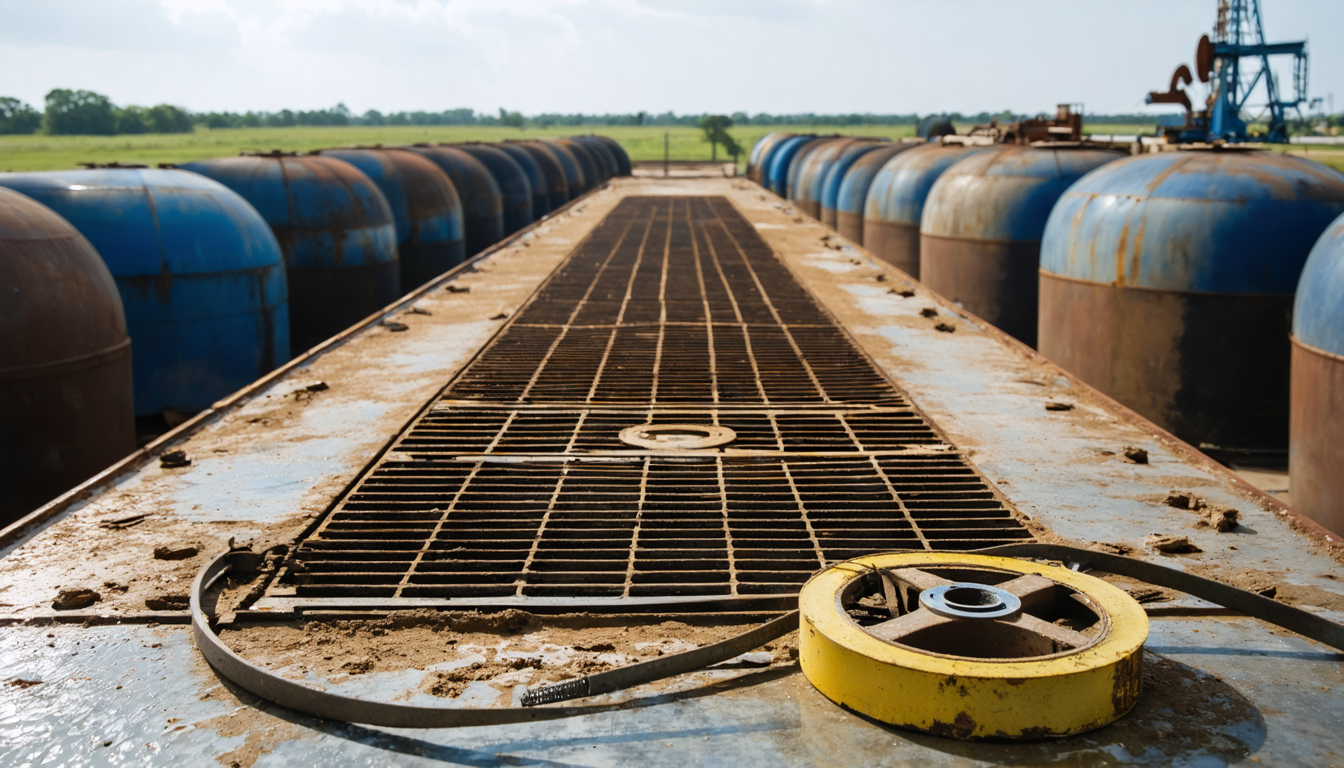
Four figures. Crescent's net purchase price is approximately $3.85 billion. The assets include approximately 68,000 barrels of oil equivalent a day of net production. Crescent identified approximately $140 million in annual synergies. Crescent shares dropped 7% in premarket trading on Thursday.
| Figure | Value | Note | Claim |
|---|---|---|---|
| Crescent's net purchase price, approximately | $3.85 billion | 10 | |
| Net production, about | 68,000 boe a day | 8 | |
| Synergies, about | $140M per year | 9 | |
| Crescent shares, premarket | 7% drop | 13 |
What happened
- Crescent says the package brings about 68,000 barrels of oil equivalent a day of net production and more than 600 Tier 1 net drilling locations.
- Devon plans to put the after-tax proceeds into faster share repurchases and debt reduction.
- Crescent shares fell 7% in premarket trading on Thursday while Devon's rose as much as 2.8%.
Why it matters
- What it costs cost Each dollar of the $3.85 billion Crescent raises as equity dilutes current holders, and each dollar raised as debt adds interest that comes ahead of the $140 million a year of synergies it is counting on.
- What doesn't add up contradiction Crescent classes more than 600 of the locations as Tier 1, while Devon says selling them focuses it on its highest-return assets, so buyer and seller rank the same acreage differently.
- What it sets up precedent The review behind this sale also covers Devon's Rockies, Anadarko and Marcellus positions, per Bloomberg, so buyers in those basins can expect more packages from the same seller.
- Who's exposed exposure Crescent ties more of its cash flow to a single basin it already calls core, so Eagle Ford well results will move a larger share of its earnings after closing.
Next story · Invest · 4h ago
G7 approves AI cyberattack drills for ministries and central banks, with private firms possibleConfirmed2 publishers
Divide Crescent's net price of about $3.85 billion [10] by the roughly 68,000 barrels of oil equivalent a day it says it is buying [8] and the Eagle Ford fields cost about $56,600 per flowing barrel [18]. On the $4.22 billion cash figure in the filing [1] (Devon rounds it to $4.2 billion [2]), the number is about $62,100 [19]. That metric puts the whole price on current output. The more than 600 net locations Crescent calls Tier 1 [8], spread across about 90,000 net acres in Karnes, DeWitt and Gonzales counties [3], are counted at zero.
The roughly $370 million between the two prices [20] comes from the estimated effective-date adjustments [10]. Crescent chief executive David Rockecharlie said the deal is "adding high-quality assets at an attractive valuation in the heart of one of our core operating areas" [12]. The Seeking Alpha contributor behind "Crescent Energy: An Excellent Deal" disclosed a long position in Crescent [17]. Crescent has identified about $140 million a year of synergies across drilling, operating expenses and marketing [9]. That is about 3.6% of the net price each year [21].
For Devon the package is about 4% of total production [4]. Set against Crescent's 68,000 barrels a day, that puts Devon near 1.7 million barrels of oil equivalent a day [22], assuming both companies count production the same way. Devon closed its Coterra acquisition in May [14], and activist investors have pushed it to sell non-core holdings faster or explore a sale of the whole company, Bloomberg reported [15]. "This sale is a direct outcome of our ongoing portfolio review, and it sharpens our focus on the highest-return, longest-duration assets," chief executive Clay Gaspar said [7]. Devon is choosing buybacks and a smaller debt balance over drilling that inventory itself [6].
KKR-backed Crescent will pay with cash on hand plus new debt and equity, and has financing commitments from JPMorgan Chase Bank and RBC Capital Markets [8][11]. The material does not include Crescent's current production, its existing debt or the split between new borrowing and new shares. Without those, neither its leverage after closing nor how much larger it gets in the Eagle Ford can be calculated.
An equity-heavy raise puts the cost on current holders through dilution and keeps the added leverage small. Lean on debt instead and the cost shows up as borrowing concentrated in a basin Crescent already calls core [12]. The $140 million a year [9] offsets part of either cost if it arrives on schedule. I think the 7% fall in Crescent's shares [13] mostly prices a financing investors cannot see yet, since 68,000 barrels a day of current output is easier to value than an undisclosed capital structure. The counter-case is that investors think about $56,600 a flowing barrel [18] is simply too much. If Crescent sells its equity and the shares keep falling, the counter-case is the right one.
What to watch
- The size of Crescent's share sale and new borrowing under the JPMorgan and RBC commitments; an equity-heavy split paired with a still-falling stock would mean investors object to the price.
- Devon's third-quarter results on November 5, 2026, when it says it will detail the sale's effect on its outlook and the after-tax proceeds available for buybacks.
- Regulatory approvals ahead of the expected year-end 2026 closing, and the final effective-date adjustments to the $3.85 billion net price.
Information, not investment advice. This story is general information about companies and markets, drawn from cited reporting. It is not a recommendation to buy, sell or hold any security; check the cited sources before acting.
Clarity's read
What the record supports and how the coverage leans. The claims behind it follow.
Reality
- Evidence62
- Adoption
- Not scored
- Hype gap+25
- Incentives72
- Confidence60
Claim ledger
Ranked by verification strength, evidence, and original report placement.
- [1]
Crescent Energy is acquiring Devon's Eagle Ford assets; the purchase price listed in the SEC filing is roughly $4.22 billion in cash.
- [2]
Devon Energy agreed to sell its Eagle Ford shale assets to Crescent Energy for $4.2 billion in cash, Devon said Thursday.
- [3]
The assets consist of roughly 90,000 net acres in Karnes, DeWitt and Gonzales counties in Texas.
- [4]
The assets represent approximately 4% of Devon's total production.
- [5]
The transaction has an effective date of July 1, 2026 and is expected to close around year-end 2026, subject to regulatory approvals and customary closing conditions.
- [6]
Devon plans to use the after-tax proceeds to accelerate share repurchases and reduce debt.
- [7]
"This sale is a direct outcome of our ongoing portfolio review, and it sharpens our focus on the highest-return, longest-duration assets," Devon President and CEO Clay Gaspar said in a statement.
- [8]
Crescent, backed by KKR, said the acquired assets include approximately 68,000 barrels of oil equivalent per day of net production and more than 600 Tier 1 net drilling locations, according to its SEC filing.
- [9]
Crescent said it identified approximately $140 million in annual synergies across drilling, operating expenses and marketing.
- [10]
Crescent's net purchase price is approximately $3.85 billion after estimated adjustments tied to the July 1 effective date.
- [11]
Crescent intends to fund the deal through cash on hand and a mix of debt and equity, and has obtained financing commitments from JPMorgan Chase Bank and RBC Capital Markets.
- [12]
"This acquisition represents a significant step forward for Crescent, adding high-quality assets at an attractive valuation in the heart of one of our core operating areas," Crescent CEO David Rockecharlie said in a statement.
- [13]
Devon shares climbed as much as 2.8% in premarket trading in New York on Thursday, while Crescent shares dropped 7%.
- [14]
Devon completed its acquisition of Coterra Energy in May and has been reviewing its holdings since, including positions in the U.S. Rockies, Oklahoma's Anadarko formation and Pennsylvania's Marcellus Shale.
- [15]
Activist investors have been pushing Devon to accelerate divestitures of non-core holdings or explore a broader sale of the company.
- [16]
Devon said it will provide additional details on the transaction's impact on its outlook when it reports third-quarter 2026 results on November 5, 2026.
- [17]
The Seeking Alpha article titled "Crescent Energy: An Excellent Deal" was written by an author who disclosed a beneficial long position in CRGY shares.
- [18]
Crescent's net price works out to about $56,600 per flowing barrel of oil equivalent per day.
- [19]
At the $4.22 billion filing price, the cost is about $62,100 per flowing barrel of oil equivalent per day.
- [20]
The gap between the filing's cash price and Crescent's net price is about $370 million.
- [21]
Crescent's identified synergies equal about 3.6% of the net purchase price per year.
- [22]
If 68,000 boe/d is about 4% of Devon's production, Devon produces roughly 1.7 million boe/d.
Sources
2 independent publishers whose own reporting we read for this story.
- qz.comDevon Energy is selling its Eagle Ford shale assets to Crescent for $4.2 billion
1 article · October 8, 2026
- seekingalpha.comCrescent Energy: An Excellent Deal
1 article · October 9, 2026
Topics and entities
Topics
- Oil and gas mergers and acquisitions
- Eagle Ford Shale
Entities
- JPMorgan Chase
- KKR
- David Rockecharlie
- RBC Capital Markets