Check Point patches two 9.8 VPN certificate flaws without naming what triggers them
Check Point assigned the CVE identifiers and the 9.8 scores itself and shipped fixes on September 9, so there is no outside read on how reachable the bugs are. Customers on R81.10 get neither a hotfix nor Live Patch.
The Watch · Security desk
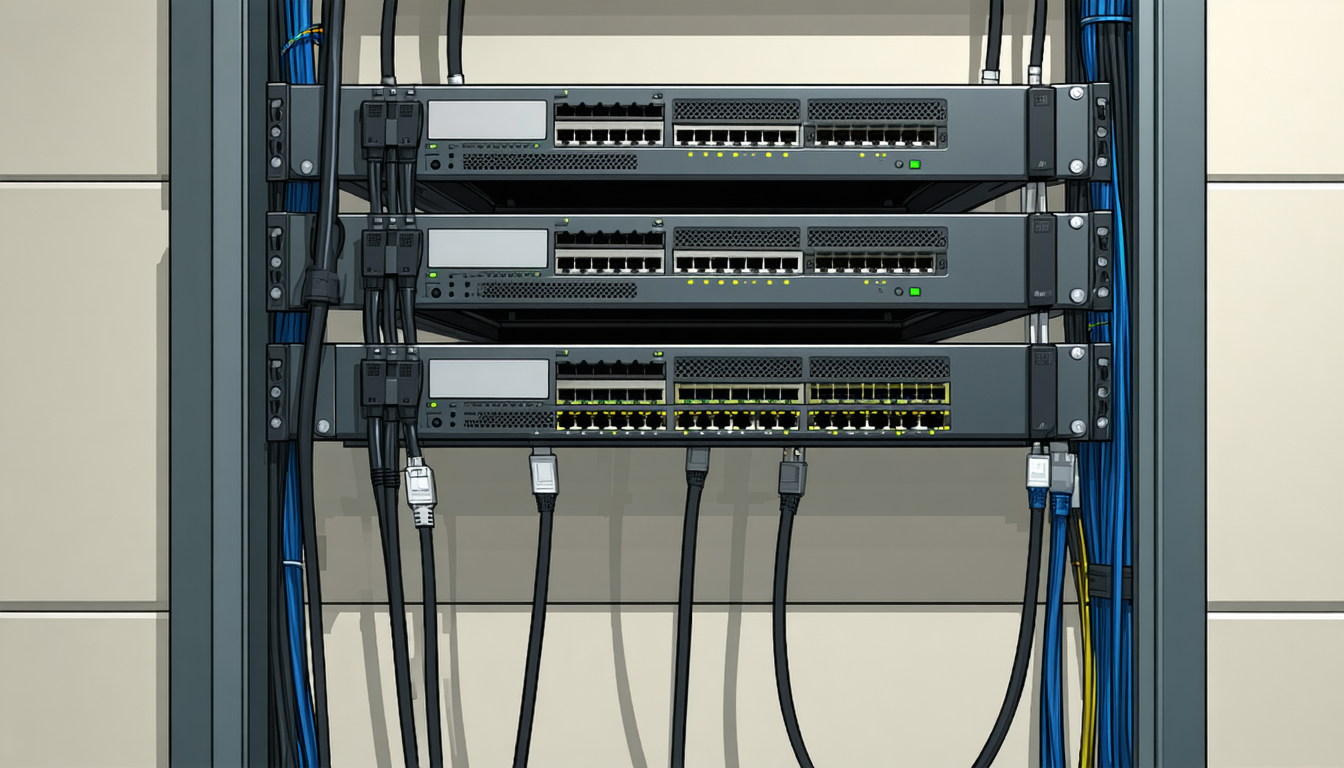
What happened
- Check Point disclosed two certificate-handling flaws on September 9 in a notice to its customer community and began delivering fixes the same day.
- CVE-2026-85102 is a failure to properly validate certificate trust during VPN negotiation, and its record says an unauthenticated remote attacker may be able to run code on the Security Gateway.
- CVE-2026-85103 is a heap-based buffer overflow during decoding of a VPN certificate's ASN.1 structure, reaching both Quantum Security Gateway and Quantum Security Management.
- Both records carry a CVSS score of 9.8, and Check Point assigned the identifiers and the scores itself.
- Check Point says it found both flaws internally and has no indication that either has been used in an attack.
Why it matters
- What it limits constraint With the triggering conditions withheld, no operator can rule a gateway out of scope on evidence; installing the fix is the only way to close the question.
- Who's exposed exposure Estates parked on R81.10 for the next several weeks hold the risk with nothing to install, and their fallback touches the same VPN configuration their remote users depend on.
- What doesn't add up contradiction Check Point's own answer about certificate processing puts systems in scope that the Canadian advisory's VPN qualifier appears to exclude, so scoping from the advisory alone can miss gateways.
- What it sets up precedent Given what happened to the June and July bugs in this line, the working assumption for a certificate path in these appliances is that it gets weaponised, which sets the patch window rather than today's clean telemetry.
Next story · Security · 3d ago
Installing MarkLogic's August fixes leaves 31 newer flaws openConfirmed2 publishers
The exposure question turns on one reply in the customer thread. Asked whether gateways with the VPN software blade switched off are affected by CVE-2026-85103, a Check Point staff member said the issue is certificate processing, so it could in theory be triggered in an environment with no VPN but with VPN certificates present [18]. Read that against the advisory from the Canadian Centre for Cyber Security, published the same evening, which names Security Gateway, Security Management Server and the Spark small-business line with no version data at all, and which names Spark twice, once for deployments using Site-to-Site or Remote Access VPN and once with no such condition [12].
Check Point has not said what the specific conditions are [6]. The reachable set is therefore unknown to the customer, and the score does not narrow it. What is on offer instead is a version list: R82.10 at Jumbo Hotfix Take 43 or below, R82 at Take 125 or below, R81.20 at Take 165 or below, marked as affected rather than fixed, covering three Quantum branches with no version information for anything else [11].
Check Point says Live Patch users are protected automatically as the rollout begins, and an employee said it installs on top of any Jumbo Hotfix level in R81.20, R82.00 and R82.10 [13]. Five accounts said it had not reached them, reporting gateways still on Take 18 or Take 17 of the urgent security update package on the day of the announcement, one with an update log showing Take 18 installed on September 1 and nothing since [19]. Several customers also said the advisory download links failed for them; a staff member replied that the links had been checked and were working; one customer then reported the advisory links still failing in two browsers while the link in the Live Patch article worked [20]. Automatic protection is verifiable only at the take level on the gateway.
R81.10 has no route. Two customers said they are on that branch and will not be moving off it for weeks, and one said neither a Jumbo Hotfix nor a Live Patch existed for it, leaving mitigation as the only option [15]. The mitigation is turning off implied rules for VPN. One customer called that too vague to act on and asked which configuration lines to comment out; another asked how to apply it without affecting remote users; neither got an answer in the thread [16].
The June and July flaws in these same products were being exploited when Check Point announced them [7]. June's, CVE-2026-50751, was an authentication bypass in Remote Access VPN and Mobile Access certificate validation, and CISA added it to the Known Exploited Vulnerabilities catalog on June 8 [9]. July's, CVE-2026-16232, was a SmartConsole authentication bypass, and it went into the same catalog [10]. Counting this week's pair, that is four criticals in the line since June, two of them exploited before the vendor spoke [17], with 93 days between the June KEV entry and this disclosure [21]. This time the fix exists ahead of the attack traffic, which helps only on the gateways whose take level actually moves.
What to watch
- Whether CISA adds CVE-2026-85102 or CVE-2026-85103 to the KEV catalog, which would end the vendor-found-only read.
- Whether Check Point publishes fixed take numbers per branch rather than an affected-versions list.
- Whether an R81.10 route appears, or the implied-rules mitigation is written out as specific configuration lines.
Clarity's read
What the record supports and how the coverage leans. The claims behind it follow.
Reality
- Evidence60
- Adoption
- Not scored
- Hype gap+20
- Incentives45
- Confidence62
Perspective Coverage
5 publishers- Builder
- Builder 15%
- Operator
- Operator 74%
- Investor
- Investor 11%
Claim ledger
Ranked by verification strength, evidence, and original report placement.
- [1]
Check Point has patched two critical vulnerabilities in the way its firewall and management products handle VPN certificates.
- [2]
Check Point disclosed the flaws on September 9 in a notice to its customer community and began delivering fixes the same day.
- [3]
Check Point says it found both flaws itself and has no indication that either has been used in an attack.
- [4]
CVE-2026-85102 is a failure to properly validate certificate trust during VPN negotiation; its CVE record says an unauthenticated remote attacker may be able to run code on the Security Gateway.
- [5]
CVE-2026-85103 is a heap-based buffer overflow that occurs while the product decodes the ASN.1 structure of a VPN certificate; its record says an unauthenticated remote attacker may be able to run code on Quantum Security Management and Quantum Security Gateway systems.
- [6]
Check Point says both flaws could allow an unauthenticated remote attacker to run code, but only "under specific conditions" that it has not described.
- [7]
In June and July, Check Point patched critical flaws in these products that it said were already being exploited when it announced them.
- [8]
Both CVE records carry a CVSS score of 9.8, and Check Point assigned the identifiers and the scores itself.
- [9]
June's flaw was CVE-2026-50751, an authentication bypass in Remote Access VPN and Mobile Access certificate validation, which CISA added to its Known Exploited Vulnerabilities catalog on June 8.
- [10]
July's flaw was CVE-2026-16232, a SmartConsole authentication bypass, which CISA added to the same Known Exploited Vulnerabilities catalog.
- [11]
Both records give the same affected list: R82.10 with Jumbo Hotfix Take 43 or below, R82 with Take 125 or below, and R81.20 with Take 165 or below. Those are the versions marked affected, not the versions containing the fix, and the list covers three Quantum branches with no version information for anything else.
- [12]
An advisory from the Canadian Centre for Cyber Security, published the same evening, lists Security Gateway, Security Management Server and Spark Firewall, Check Point's small-business line, with no versions at all; Spark appears twice, once for deployments using Site-to-Site or Remote Access VPN and once without that condition.
- [13]
Check Point says customers using Check Point Live Patch are protected automatically as the rollout begins, which started September 9; a Check Point employee said in the thread that it can be installed on top of any Jumbo Hotfix level in R81.20, R82.00 and R82.10, naming only those three versions.
- [14]
The second route to the fix is the Jumbo Hotfix; Check Point told customers to install the latest one for their deployed version once available.
- [15]
Two customers said in the thread that they are running R81.10 and will not be moving off it for weeks; one said no Jumbo Hotfix and no Live Patch was available for that branch, leaving mitigation as the only option.
- [16]
One customer described the advisory's mitigation as turning off implied rules for VPN, called it too vague to act on and asked which configuration lines to comment out; another asked how to apply the mitigation without affecting remote users. Neither question had an answer in the thread.
- [17]
Four critical flaws have been disclosed in these Check Point products since June (CVE-2026-50751, CVE-2026-16232, CVE-2026-85102, CVE-2026-85103), two of which were already being exploited when announced.
- [18]
Asked in the community thread whether gateways with the VPN software blade turned off are affected by CVE-2026-85103, a Check Point staff member replied that the issue is about certificate processing, so it could in theory be triggered in an environment without a VPN but with VPN certificates present.
- [19]
Five separate accounts reported that gateways were still on Take 18 or Take 17 of the urgent security update package on the day of the announcement; one posted an update log showing Take 18 installed on September 1 and nothing since.
- [20]
Several customers reported that download links in the two advisories did not work for them; a Check Point staff member replied that the links had been checked and were working; one customer said afterward that the advisory links still failed in two browsers while the link in the Live Patch article worked.
- [21]
93 days elapsed between CISA adding CVE-2026-50751 to the KEV catalog on June 8 and Check Point's September 9 disclosure of the two certificate flaws.
Sources
5 independent publishers whose own reporting we read for this story.
- bleepingcomputer.comDutch NCSC: Critical Check Point VPN flaws exploitation is imminent
1 article · September 12, 2026
- scworld.comCheck Point patches two critical VPN gateway bugs
1 article · September 11, 2026
- securityaffairs.comDutch NCSC Warns: Critical Check Point VPN Flaws Put Networks at Risk
1 article · September 14, 2026
- securityweek.comCheck Point Patches Critical VPN Vulnerabilities
1 article · September 11, 2026
- thehackernews.comCheck Point Discloses Two 9.8-Rated VPN Certificate Flaws Enabling Unauthenticated RCE
2 articles · September 10, 2026
Topics and entities
Entities
- Check Point Security Management Server
- CVE-2026-85102
- Check Point Security Gateway
- Check Point Live Patch
- CISA Known Exploited Vulnerabilities Catalog
- Check Point
- Check Point Spark Firewall
- CVSS
- NCSC (Netherlands National Cyber Security Centre)
- CISA
- Canadian Centre for Cyber Security