Apple's US accessory pages stop naming Intel Macs for the USB-C Magic Mouse and Trackpad
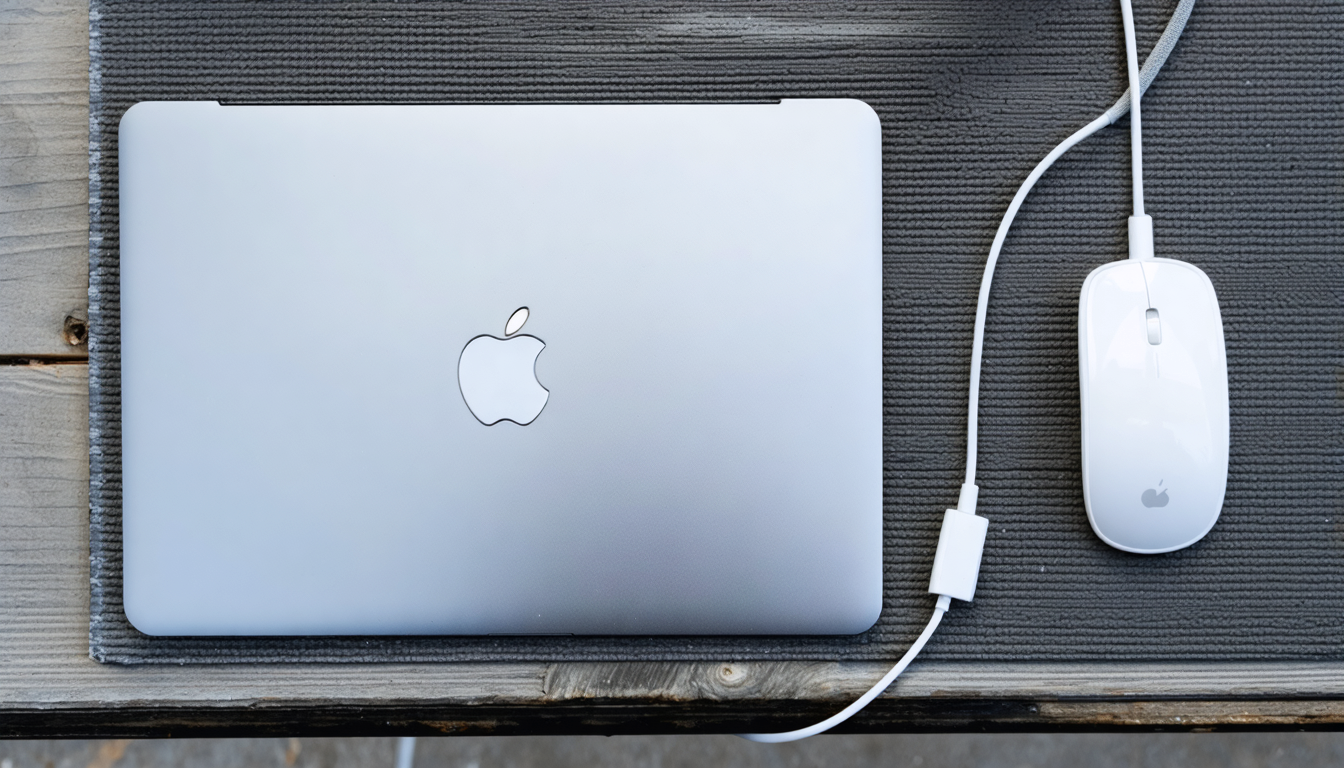
Apple has removed Intel Macs from the US compatibility lists for its USB-C Magic Mouse and Magic Trackpad. MacRumors reports that the accessories still work, but support desks lose Apple's written cover for Intel machines the newest macOS already drops.
The Product Desk
Help desks can't cite Apple's US lists for Intel Macs. Intel users: both accessories still work, per MacRumors. Procurement: test pairing on an Intel Mac on macOS 15.1+ and record results. Planners: macOS Golden Gate excludes Intel Macs. Philippine page still lists Intel models.
- Who's exposed exposure IT help desks Can no longer cite Apple's US compatibility lists for Intel Macs paired with the USB-C Magic Mouse or Trackpad, claim 1
- What's now possible capability Existing Intel Mac users Both accessories still work on Intel Macs despite the list changes, MacRumors reports, claim 2
- What it limits constraint Procurement teams Pair with a representative Intel Mac on macOS 15.1 or later before bulk orders, and record model, OS and results, claim 11
- What it limits constraint Intel retirement planners The latest macOS release, Golden Gate, already excludes Intel Macs, claim 13
- What doesn't add up contradiction Apple's regional pages Philippine Magic Mouse specs still list Intel models, including the 2019 Mac Pro and 2018 Mac mini, claim 9
| Who | How | Kind | Claim |
|---|---|---|---|
| IT help desks | Can no longer cite Apple's US compatibility lists for Intel Macs paired with the USB-C Magic Mouse or Trackpad | exposure | 1 |
| Existing Intel Mac users | Both accessories still work on Intel Macs despite the list changes, MacRumors reports | capability | 2 |
| Procurement teams | Pair with a representative Intel Mac on macOS 15.1 or later before bulk orders, and record model, OS and results | constraint | 11 |
| Intel retirement planners | The latest macOS release, Golden Gate, already excludes Intel Macs | constraint | 13 |
| Apple's regional pages | Philippine Magic Mouse specs still list Intel models, including the 2019 Mac Pro and 2018 Mac mini | contradiction | 9 |
What happened
- Apple revised the accessories' US product pages around Aug. 25 and updated their technical specifications in early October, TechRepublic reported.
- Both accessories still require macOS 15.1 or later, which several Intel Macs can run, so the stated software minimum does not explain why they were dropped.
- Apple's Philippine Magic Mouse page still lists Intel models, including the 2019 Mac Pro, 2018 Mac mini and 2020 Intel MacBook Air.
- Apple has not explained the revised lists or confirmed that it plans to end support for Intel Macs.
Why it matters
- What it limits constraint Help desks that close peripheral tickets by pointing to Apple's US documentation can no longer cite it for Intel Macs paired with these accessories.
- Who has to decide decision Buying USB-C Magic accessories for Intel desks is still low-risk, because the same units stay listed for the Apple-silicon Macs that replace those machines.
- What it costs cost Teams that keep supporting Intel pairings now have to produce the evidence themselves, as their own pairing tests and configuration records.
- Who has to decide decision Intel retirement budgets are better tied to the macOS release that already excludes these machines than to accessory pages that vary by region.
Next story · Product · 8h ago
Older Apple TV 4K owners can try Siri AI in beta without buying the $299 boxConfirmed2 publishers
A help-desk tech is approving a USB-C Magic Trackpad for a designer who still works on an Intel Mac. The purchase form wants a compatibility reference, so she opens Apple's US spec page. It lists Apple-silicon Macs and the MacBook Neo, which runs an A18 Pro chip. No Intel model appears [4][14].
The trackpad would pair anyway. Both USB-C accessories still work on Intel Macs, according to MacRumors [2]. Here's what users actually do: pair the thing and get on with the day. Here's what teams tell themselves users do: buy only what the vendor page lists, and call Apple when something breaks. TechRepublic describes the gap in procurement terms, as the difference between a device that works in practice and one the manufacturer's documentation explicitly covers [16]. Meeting the macOS minimum doesn't settle whether Apple will help with a particular combination, and neither does a clean pairing [12].
The page edit is weak evidence that Apple is ending Intel support. Apple made the change in two rounds more than a month apart [18], and TechRepublic found nothing that sets a technical cutoff for either accessory [17]. Teams pricing the end of Intel already have a firmer date to plan around: Golden Gate, the latest macOS release, excludes Intel Macs [13]. Apple's Rosetta 2 changes affect Intel apps running on Apple-silicon Macs and leave Bluetooth pairing alone [15].
I'd keep buying the USB-C accessories for Intel desks. They stay on Apple's US list once their users move to Apple-silicon Macs [19], and TechRepublic sees no reason to replace a working one just because a Mac model fell off the US page [6]. The tradeoff is that a pairing fault on an Intel Mac becomes your desk's problem to document. TechRepublic's checklist covers that: confirm macOS 15.1 or later, pair with a representative Intel Mac before a bulk order, then record the model, OS version, accessory generation and result [11]. The change covers only the USB-C models introduced in 2024. Nothing in the reporting shows a matching edit for the older Lightning versions [10].
Sort the Intel fleet on two questions. First, does each machine already have a replacement date? Second, does your desk close peripheral tickets by citing Apple's pages, or from its own tests?
- Dated, own tests: buy the accessory and move on. It goes with the user to the new Mac [19]. - Dated, cites Apple: buy it and file the pairing record with the asset [11]. - Undated, own tests: the accessory is fine. The Mac is the open item, because Golden Gate excludes it [13]. - Undated, cites Apple: this group needs a replacement date and a budget line first. Its support case rests on a US page that no longer names its Macs [4].
What to watch
- Whether Apple puts Intel models back on the US lists or removes them from the Philippine page. Either move would show which page reflects Apple's policy.
- Any matching edit to Apple's US compatibility pages for the older Lightning Magic Mouse and Magic Trackpad.
- Whether Apple support starts turning down help requests for USB-C Magic accessories paired with Intel Macs.
Clarity's read
What the record supports and how the coverage leans. The claims behind it follow.
Reality
- Evidence60
- Adoption
- Not scored
- Hype gap+5
- Incentives
- Not scored
- Confidence60
Claim ledger
Ranked by verification strength, evidence, and original report placement.
- [1]
Apple has removed Intel-based Macs from its US compatibility lists for the USB-C Magic Mouse and Magic Trackpad.
- [2]
According to MacRumors, both accessories remain functional on Intel-based Macs despite the changes.
- [3]
Apple reportedly revised the accessories' product pages around Aug. 25 and updated related technical specifications in early October.
- [4]
The US lists now identify Apple-silicon Macs and the MacBook Neo, without naming Intel Mac models.
- [5]
Apple has not explained the revised lists or confirmed that it intends to end support.
- [6]
For existing users, there is no reason to replace a working Magic Mouse or Magic Trackpad solely because their Mac model has disappeared from Apple's US documentation.
- [7]
Apple's current Magic Mouse and Magic Trackpad specifications still require macOS 15.1 or later.
- [8]
Several Intel Macs support macOS 15.1, so the published software requirement does not explain why those models disappeared from the US compatibility lists.
- [9]
Apple's Philippine Magic Mouse specifications continue to list Intel models, including the 2019 Mac Pro, 2018 Mac mini, and 2020 Intel MacBook Air.
- [10]
The change concerns the USB-C Magic Mouse and Magic Trackpad introduced in 2024 and does not establish that Apple has made equivalent compatibility changes to earlier Lightning-equipped accessories.
- [11]
TechRepublic advises confirming the Mac runs macOS 15.1 or later, pairing the accessory with a representative Intel Mac before a bulk order, and recording the Mac model, operating system, accessory generation and pairing results for future support requests.
- [12]
Meeting the macOS requirement does not guarantee that Apple formally supports every Intel Mac configuration, and successful pairing does not establish whether Apple will provide assistance for a particular combination of hardware.
- [13]
The latest macOS release, Golden Gate, excludes Intel Macs.
- [14]
The MacBook Neo uses an A18 Pro chip rather than an Intel processor.
- [15]
Apple's Rosetta 2 transition affects software compatibility on Apple-silicon Macs, not Bluetooth accessory pairing.
- [16]
For procurement teams, the distinction is between a device that works in practice and one explicitly covered by the manufacturer's compatibility documentation.
- [17]
Apple's move away from Intel hardware does not establish a technical cutoff for the Magic Mouse or Magic Trackpad.
- [18]
Apple's two documentation revisions were more than a month apart.
- [19]
A USB-C Magic Mouse or Trackpad bought for an Intel Mac remains on Apple's US compatibility list once its user moves to an Apple-silicon Mac.
Sources
2 independent publishers whose own reporting we read for this story.
- macrumors.comApple Drops Intel Macs From Magic Mouse/Trackpad Compatibility Lists
1 article · October 7, 2026
- techrepublic.comApple Drops Intel Macs From Magic Mouse and Trackpad Compatibility Lists
1 article · October 9, 2026
Topics and entities
Topics
- Apple Silicon Transition
- Peripheral compatibility