Four shared tools turn nine Claude agents into one alignment research loop
Anthropic's 0.97 PGR belongs to small open-weights models, but the plumbing that produced it is copyable at roughly $22 per agent-hour, and the ten tests that judged the work still came from humans.
The Engineer · Build desk
What happened
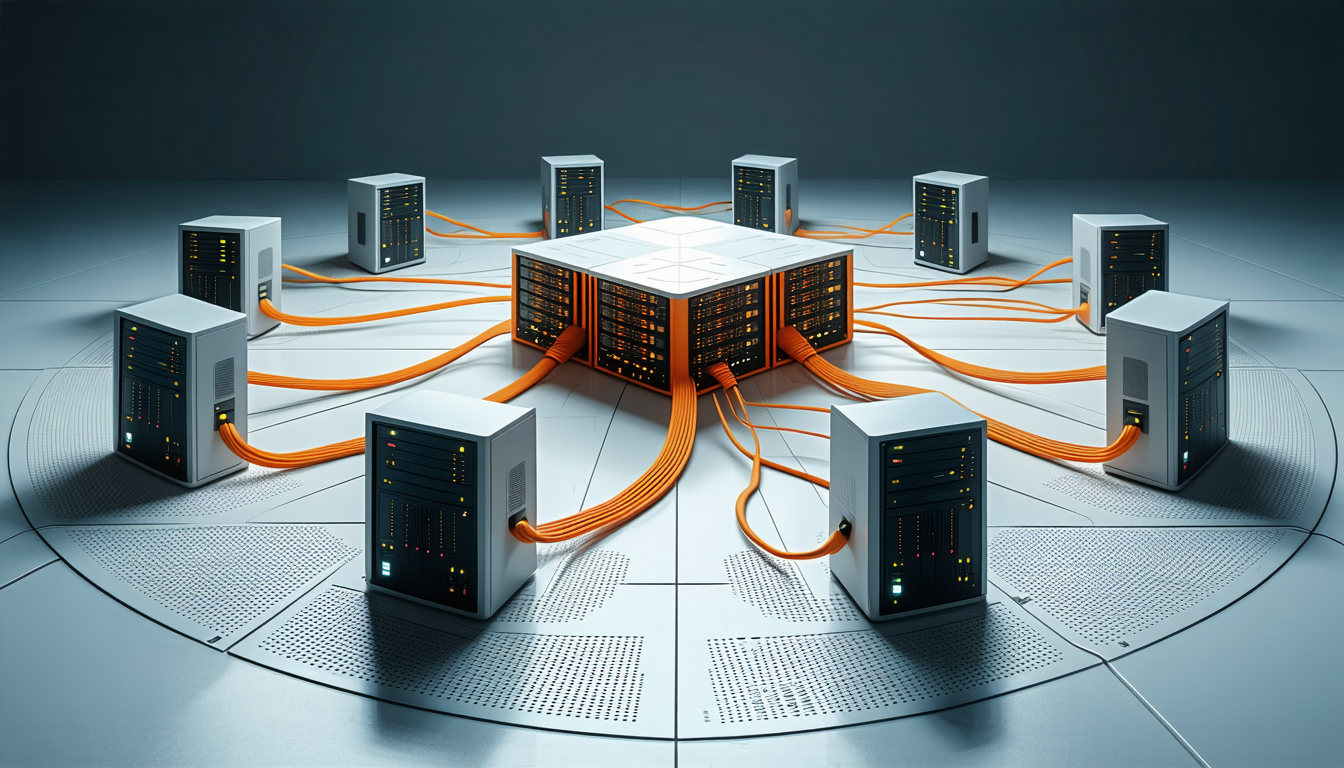
- Anthropic ran nine parallel Claude Opus 4.6 instances as Automated Alignment Researchers, each given a sandbox, shared storage, a collaboration forum and remote scoring.
- In a weak-to-strong supervision setting, the strongest methods the agents found reached a Performance Gap Recovered of 0.97 on open-weights datasets.
- Across ten separate tests built to surface undesirable or misaligned model responses, the automated systems improved every one without degrading general model quality.
- The run logged 800 research hours across the nine agents over five additional days, with compute and API usage estimated at about $18,000 in total.
- A production-scale test with Claude Sonnet 4 showed only limited improvement, which Anthropic reads as evidence that robust evaluation remains essential.
Why it matters
- What it limits constraint The loop can only chase what its grader measures, so anyone copying this architecture needs an evaluation harness worth pointing it at before any method search pays for itself.
- What doesn't add up contradiction The $4 API hour and the $22 agent-hour bill different things, so budgeting from the cheaper figure understates the real cost by roughly the price of the training runs.
- What's now possible capability Iterative method search at this volume now sits inside the budget of a team that could never staff it in researcher-hours, provided that team already owns the graders.
- What it sets up precedent A scorer the agent cannot write to becomes the expected default for any self-improving training loop someone proposes to ship, and its absence becomes a review question.
Next story · Security · Sep 23
One operator ran 105 AI-driven attack waves in five days at about $25 a companyConfirmed2 publishers
The cycle is what makes the tool list legible. Each agent works through the available literature, proposes a training idea, finetunes for about thirty minutes, scores the result, then carries the winners into the next round and drops the rest [14].
That score is the only signal steering the loop, which is why scoring being remote matters more than it looks in a feature list [3]. My read: the location is the design. A grader living inside the sandbox where the agent writes and runs code is a grader the agent can edit. On the far side of a network call it can only submit and wait. The shared storage and the forum do the other half of the work, and Anthropic is explicit that shared artifacts are what let parallel agents build on each other rather than run as isolated chat sessions [10].
Now the money, because the two published figures are not measuring the same thing. Eighteen thousand dollars over 800 agent-hours is $22.50 an hour [21], consistent with the roughly $22 per AAR-hour reported from the announcement [8]. mezha.net's account of the paper prices an hour of AAR use through the API at about $4, against about $150 for an hour of an Anthropic researcher [17]. If both numbers hold, the token bill for 800 hours is near $3,200, about 18 percent of the total, leaving roughly $14,800 in training compute [23]. Reproducing this is a GPU problem wearing an API budget's clothes.
Nine agents across five days is 1,080 wall-clock agent-hours, so 800 research hours is about 74 percent occupancy [22]. The remainder is either idle time or an honest definition of the word "hour".
The human comparison deserves the same scrutiny. According to mezha.net's reading of the paper, the best method the system found beat, on average, what experienced specialists proposed in six hours, and human-directed research directions did not perform better [16]. Six hours of human method selection against 800 hours of automated search compares budgets at least as much as it compares judgement. At $150 an hour, 800 human hours would run $120,000, so this cost about 15 percent of the nominal human equivalent [9].
Whether the headline number travels depends on conditions the study supplies itself. Held-out transfer was substantially stronger for math than for coding [11], so a method that searched well in one domain is not owed the next. And the authors name the binding limit directly: the system is only as good as the tests, which have to measure aligned behaviour rather than narrow task skill, and building, updating and extending those tests stays human work [1]. Ten of them, written by people, decided what counted as an improvement [15][6].
What to watch
- Whether Anthropic publishes the forum and remote scoring interfaces, which is what would let others reproduce the loop rather than the number.
- A production-scale rerun on a current model, since the Sonnet 4 result is what decides whether this is a demo or a pipeline.
- Any cost breakdown separating token spend from training compute inside the $18,000, which would confirm or kill the 18 percent estimate.
Clarity's read
What the record supports and how the coverage leans. The claims behind it follow.
Reality
- Evidence45
- Adoption12
- Hype gap+20
- Incentives78
- Confidence55
Claim ledger
Ranked by verification strength, evidence, and original report placement.
- [1]
The paper's stated limitation is that effectiveness depends on the quality of the tests, which must genuinely measure safe and aligned behaviour rather than narrow task ability; creating, updating and expanding those tests, and maintaining the research base the agents read, remains key further work.
- [2]
Anthropic's Automated Alignment Researchers (AAR) experiment used nine parallel Claude Opus 4.6 instances.
- [3]
Each automated researcher had lightweight tools: a sandbox for experimentation, shared storage, a forum for collaboration, and remote scoring.
- [4]
In a weak-to-strong supervision setting, Anthropic reports its strongest methods reached a Performance Gap Recovered (PGR) of 0.97 on open-weights datasets.
- [5]
PGR is the study's metric for how much of the performance difference is recovered when weaker supervision is used to improve a stronger model.
- [6]
The work is a research demonstration rather than a new general-purpose safety product, and leaves humans responsible for defining goals and judging results; the result does not establish that Claude can independently solve alignment for frontier systems.
- [7]
The study accumulated 800 research hours across the nine AARs over five additional days.
- [8]
Anthropic estimates the overall cost of compute and API usage at about $18,000, or roughly $22 per AAR-hour.
- [9]
At $150 per researcher-hour, 800 human hours would cost $120,000, making the $18,000 run about 15 percent of that nominal figure.
- [10]
Shared research artifacts allowed the parallel agents to build on each other's work rather than operate as isolated chat sessions.
- [11]
Anthropic tested whether the best methods transferred to held-out tasks; the outcome was substantially stronger for math than for coding.
- [12]
A production-scale test with Claude Sonnet 4 found limited improvement, reinforcing Anthropic's view that robust evaluation remains essential.
- [13]
The official study describes a multi-agent research workflow and does not present the work as a simple 48-hour, one-GPU experiment.
- [14]
The AAR loop works through available scientific material, proposes an idea for training a model, runs finetuning for roughly 30 minutes, then evaluates the result; successful methods are reused in later cycles and unsuccessful ones discarded.
- [15]
The authors tested AAR on ten separate tests designed to detect undesirable or misaligned model responses; the automated systems improved results in every case without degrading overall model quality.
- [16]
Per the paper as reported by mezha.net, the most effective method found by the automated system on average outperformed approaches proposed by experienced specialists over six hours of work, and human-directed research directions did not produce stronger performance.
- [17]
mezha.net reports the authors put an hour of AAR use via the API at about $4, against about $150 for an hour of an Anthropic researcher's time.
- [18]
mezha.net attributes the first results to a researcher in Anthropic's Fellows program, named in Ukrainian transliteration as Chen Yuehan, and cites TechCrunch.
- [19]
The paper states the results give early grounds to believe automated alignment finetuning could become practical in the near future.
- [20]
The per-agent toolset listed by Anthropic has four components.
- [21]
The reported spend works out to $22.50 per AAR-hour.
- [22]
Nine agents over five days is 1,080 wall-clock agent-hours, so 800 research hours is about 74 percent of the available agent time, assuming the agents were available throughout.
- [23]
If API use costs about $4 per AAR-hour, API spend across 800 hours is about $3,200, roughly 18 percent of the $18,000 total, leaving about $14,800 (82 percent) in non-API compute such as the finetuning runs.
Sources
2 independent publishers whose own reporting we read for this story.
- dev.toAnthropic Shows Claude Can Automate Parts of AI Alignment Research, With Limits
1 article · August 28, 2026
- mezha.netAnthropic показала, як ШІ автоматизує дослідження безпеки моделей
1 article · August 28, 2026
Topics and entities
Topics
- Multi-Agent Research Workflows
- Agent Run Economics
- Safety Evaluation Quality
- Automated Alignment Research
- Weak-to-Strong Supervision
Entities
- Claude Sonnet 4
- Claude Opus 4.6
- Performance Gap Recovered
- Automated Alignment Researcher
- TechCrunch
- Anthropic
- Anthropic Fellows Program